
Noticed redness, itching, or a mild rash after using your doll? In most cases this is a manageable skin reaction, not a serious allergy, and this guide shows you how to tell the two apart, calm the skin, and stop it from coming back.
Table of Contents
SweetieDoll has sold sex dolls since 2022 and works with more than 40 doll manufacturers, so the reaction questions buyers send us follow a clear pattern. The trigger is rarely the doll’s base material. It is usually an additive, a lubricant, trapped moisture, or friction, and each of those has a simple fix.
The short version: A sex doll skin reaction is a form of contact dermatitis, meaning skin inflammation caused by direct contact with a material, chemical, or lubricant. True allergy to the base polymer is uncommon, and seller material guidance puts sensitivity to TPE at under 1% of people.
Most reactions are simple irritation. They usually clear within about a week once you remove the cause, and a few changes to your material, cleaning, and lubricant routine normally stop them returning.
What Causes a Sex Doll Skin Reaction?
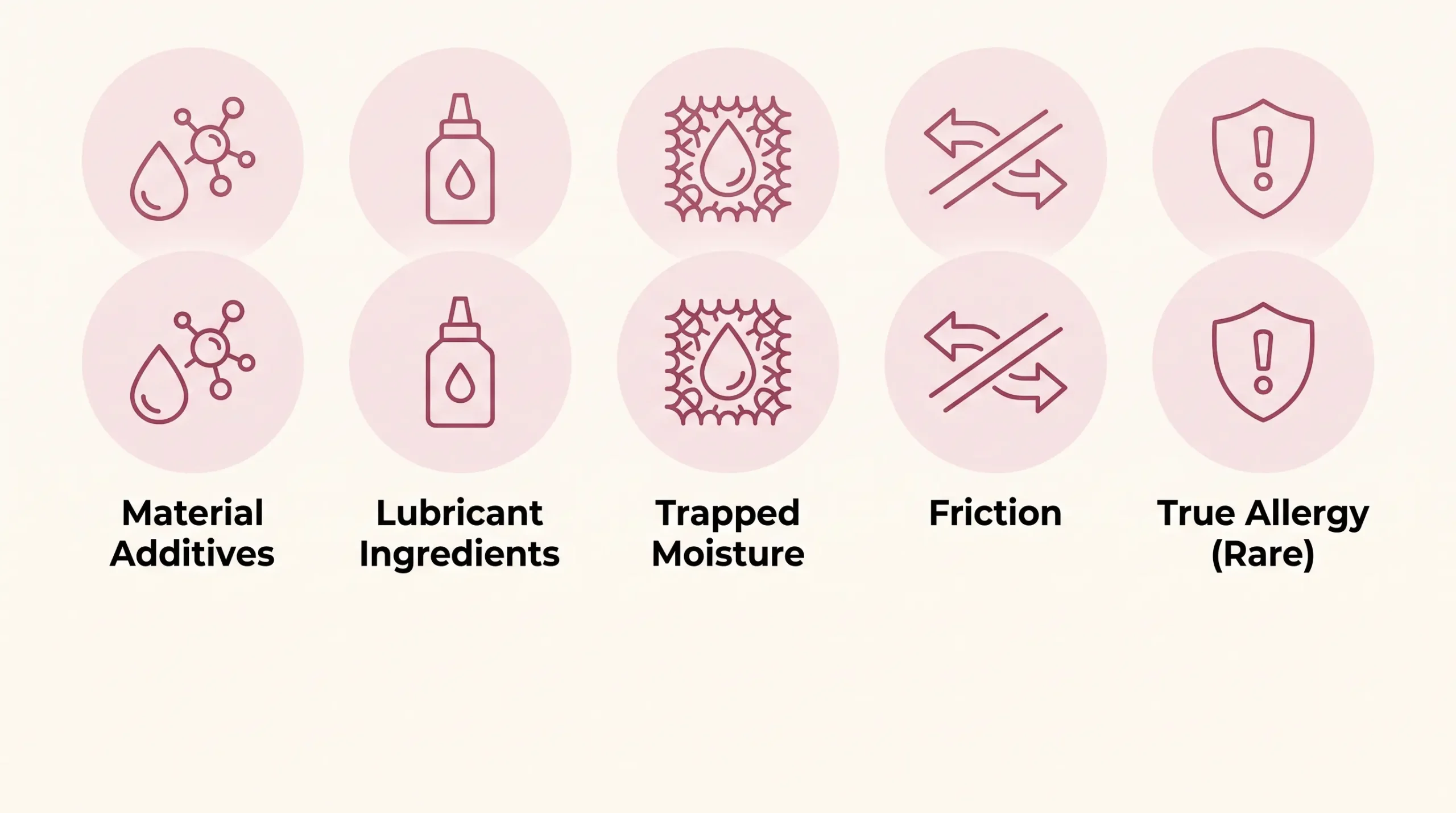
Most sex doll skin reactions come from one of five sources, and only one of them is a true material allergy:
- Material additives: low-grade TPE and soft PVC can carry plasticizers, dyes, and processing oils. Flexible PVC can contain plasticizers at up to 50% of the material’s weight. The trigger usually sits in this additive package, not the base polymer itself.
- Lubricant ingredients: lubricants that contain glycerin or propylene glycol irritate an estimated 10 to 15% of users, and that irritation is easy to mistake for a material allergy.
- Trapped moisture and bacteria: porous TPE holds fluids in tiny surface pores when it is not dried fully, which can lead to irritation and odor over time.
- Friction: repeated rubbing on one patch of skin can cause redness on its own, with no chemical trigger involved.
- A genuine material allergy: the least common cause. Fewer than 1% of people react to TPE, and a true silicone allergy is almost unheard of.
Additives, plasticizers, and dyes
The additive package is where most trouble hides. A base polymer like medical-grade silicone is inert, but the softeners, colorants, and oils blended into cheaper materials vary by brand and batch. This is why two dolls sold as the same material can behave very differently on your skin. Buying from a seller that documents its materials removes most of this guesswork.
Lubricant, moisture, and friction
Because a full-size doll can stay in contact with a large area of skin for a long stretch, sometimes overnight, a small irritant can turn into a visible reaction. One owner review we came across describes falling asleep against a TPE doll and waking with a rash along one side of the body. In our experience fielding buyer questions, cases like this trace back to lubricant or cleaning far more often than to the polymer.
Allergy vs. Irritation: How to Tell Them Apart
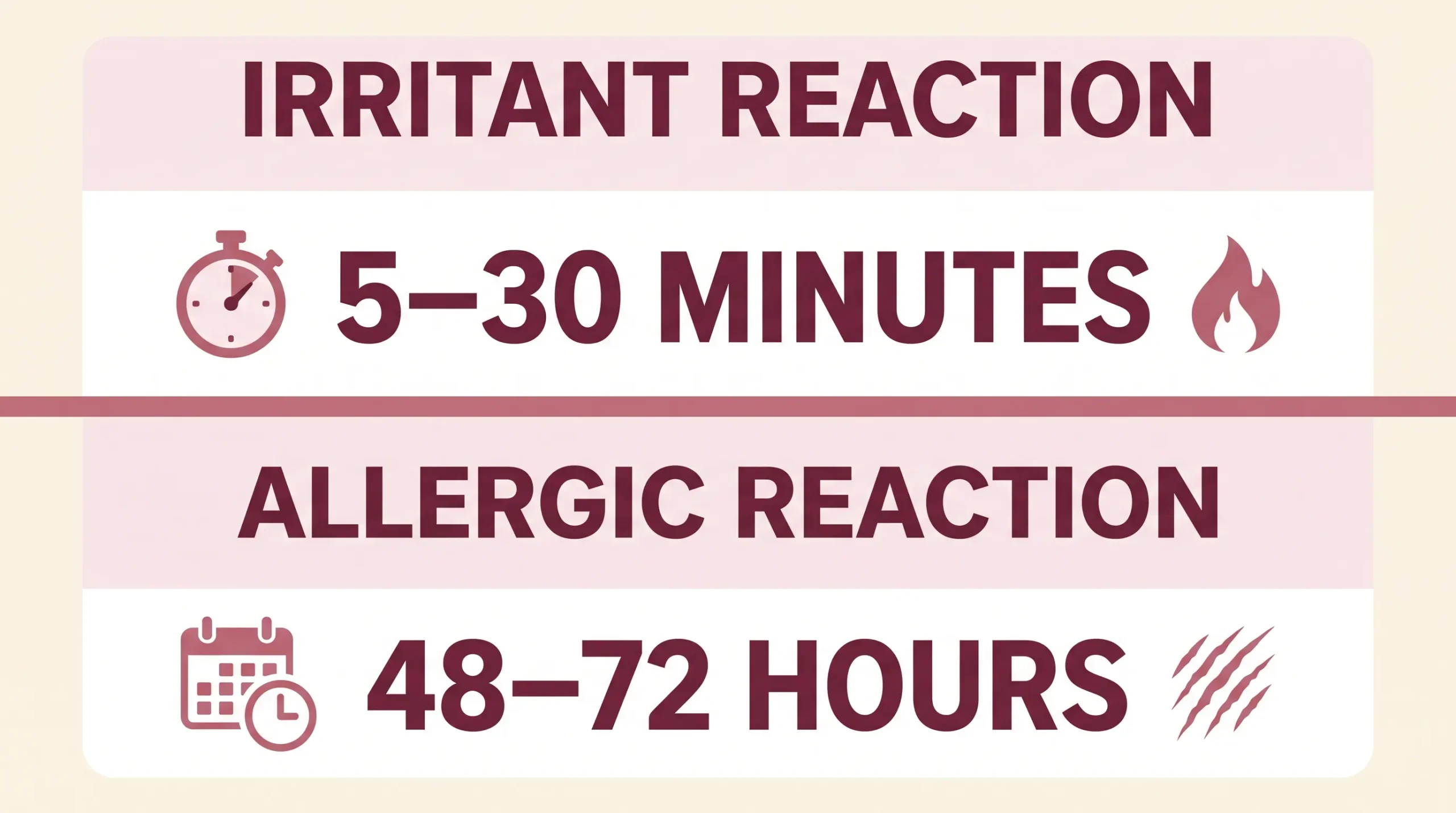
A sex doll skin reaction is usually irritant contact dermatitis, which is direct irritation from a material, additive, or friction, rather than a true immune allergy. Irritation tends to appear within 5 to 30 minutes, while allergic contact dermatitis is delayed and often peaks 48 to 72 hours after contact.
The difference matters because it changes what you do next. Irritant contact dermatitis is a non-immune reaction, so it can happen on the first contact and usually feels like burning or stinging. Allergic contact dermatitis is a delayed, type IV immune response, so it tends to itch, and it returns every time your skin meets that same trigger. Irritant reactions also make up roughly 80% of all contact dermatitis cases, which is another reason true allergy is the less likely explanation.
| Feature | Irritant reaction (ICD) | Allergic reaction (ACD) |
|---|---|---|
| Onset | Fast, within 5 to 30 minutes | Delayed, peaks 48 to 72 hours after contact |
| Feels like | Burning or stinging | Itching, sometimes spreading |
| Triggered by | Additives, friction, harsh cleaning | A specific substance your immune system reacts to |
| Repeats? | Only with enough exposure | Every time you contact the trigger |
Irritant contact dermatitis: fast and burning
If the reaction shows up almost right away and stings more than it itches, irritant contact dermatitis is the likely cause. It is a direct response to something on the surface, so removing that something usually settles the skin quickly.
Allergic contact dermatitis: delayed and immune
If the reaction is itchy, shows up a day or two later, and returns on every use, allergic contact dermatitis is more likely. This pattern is worth noting for a doctor, since a dermatologist can confirm the exact trigger with patch testing.
Signs and Symptoms to Watch For
Most reactions show up as localized redness, itching, or a mild rash exactly where your skin touched the doll. Mild signs to watch for include:
- Redness (erythema) limited to the contact area
- Itching or a burning feeling on the surface
- Small bumps or a light rash that stays local
- Dry or flaky skin after repeated contact
A mild reaction usually clears within about a week once contact stops and the area is kept clean. If blistering develops, it can take closer to two weeks to fully settle.
Mild, localized signs
Localized redness and itching that fade after you stop contact are the most common presentation. These respond well to the at-home steps further down, and they rarely need a doctor.
Red-flag symptoms that need a doctor
Some symptoms call for medical care rather than home treatment. Stop using the doll and see a clinician if you notice widespread or spreading redness, blistering, swelling of the face or throat, a fever, or any trouble breathing. These are uncommon with doll materials, but they should never be managed at home.
How to Patch-Test and Self-Check at Home
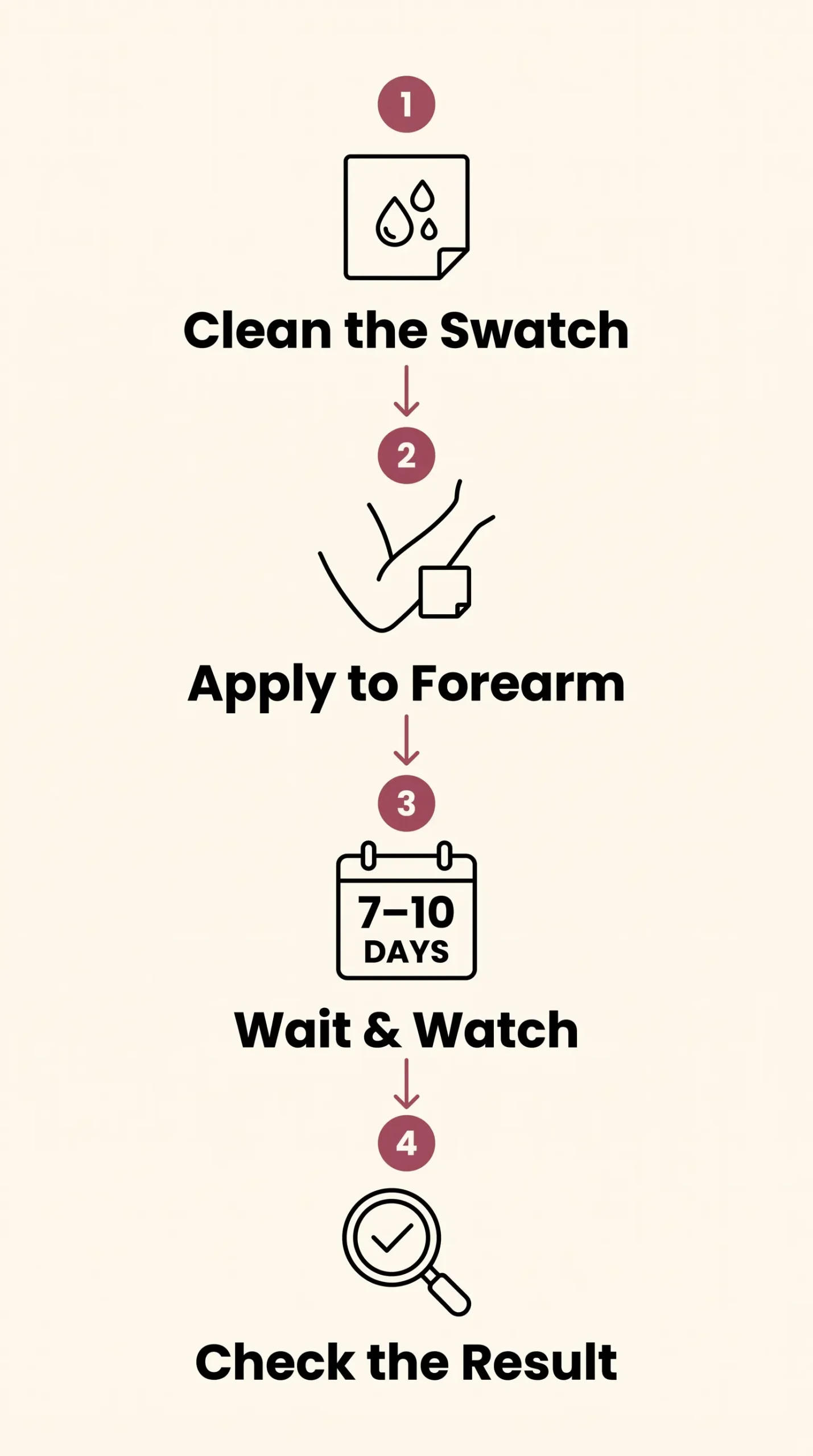
Before full contact with a new doll, run a simple home patch test. Clean a small area of the doll’s skin, press it against your inner forearm, and check that spot twice daily for 7 to 10 days. The steps are:
- Clean the test area: wash a small patch of the doll’s skin with mild soap and warm water, then dry it.
- Apply to your inner forearm: hold or rest that clean patch against the soft skin of your inner forearm for a few minutes.
- Wait and watch: check the spot twice daily for 7 to 10 days, which is long enough to catch a delayed allergic reaction.
- Read the result: redness, itching, or bumps at that spot suggest a reaction, so avoid full contact and review your material or lubricant.
The at-home patch-test steps
A home patch test screens for an obvious reaction, but it has limits. It cannot replace a clinical patch test, where a dermatologist applies a standard panel of allergens and reads the results against known triggers. Treat the home version as a first filter, not a diagnosis.
Rule out lubricant and cleaning first
If you already react, work through the likely causes in order before you blame the material. First switch to a plain water-based lubricant, since glycerin and propylene glycol are common irritants. Next, tighten your cleaning and drying routine to remove trapped residue. Only if the reaction continues after both changes should you suspect the doll’s material. Our SweetieDoll cleaning and care FAQ walks through each step in more detail.
What to Do If Your Skin Already Reacted
If you already have a reaction, stop using the doll, wash the area with cool water and a fragrance-free cleanser, and pat it dry without scrubbing. From there, a simple routine usually helps:
- Stop contact: set the doll aside until your skin is fully settled.
- Gently cleanse: use cool water and a fragrance-free cleanser, then pat dry rather than rub.
- Cool the skin: apply a cool compress for 10 to 15 minutes to ease itching and heat.
- Consider an OTC option: an antihistamine or 1% hydrocortisone cream can help. Follow the label, which generally means using hydrocortisone no more than 3 to 4 times a day and no longer than 7 days without a doctor’s guidance.
- Monitor: most mild reactions improve within a few days, so watch for steady progress.
To restock gentle, fragrance-free cleaning supplies, our doll cleaning and care accessories cover the basics owners reach for most.
Immediate at-home steps
Cool water, a gentle cleanser, and a cool compress handle the large majority of mild reactions. Keeping the area clean and dry while it heals also lowers the chance of a secondary skin infection.
When to see a dermatologist
See a dermatologist if the reaction is severe, keeps spreading, does not improve within about a week, or returns on every use. A clinician can confirm whether you are dealing with irritation or a true allergy, and identify the exact trigger.
Important note: This article is general education, not medical advice, and individual reactions vary. If you have severe, spreading, or persistent symptoms, or any blistering, fever, or trouble breathing, stop use and see a dermatologist or physician promptly.
How to Prevent Reactions and Choose Body-Safe Materials
The most reliable way to avoid a repeat reaction is to remove the one variable you control. Pick a documented body-safe material, then keep it clean, dry, and paired with the right lubricant. Use the table below to match your priority to a sensible material.
| Your priority | Better pick | Why it helps |
|---|---|---|
| Sensitive skin | Platinum-cure (medical-grade) silicone | Non-porous and hypoallergenic, needs no plasticizers |
| Soft feel on a budget | Phthalate-free TPE with test documents | Removes a known irritant class from the material |
| Lowest upkeep | Silicone | Can be cleaned thoroughly, holds less residue |
Here is why the material choice pays off. Medical-grade silicone is non-porous and hypoallergenic, which means it needs no plasticizers and can be cleaned thoroughly, so sensitive skin faces a much lower chance of a repeat reaction. A phthalate-free label backed by real test documents removes a known irritant class, so you see fewer additive-driven reactions. A plain water-based lubricant does not degrade the material and rinses off cleanly, so less residue and less glycerin-related irritation stay on your skin. Finishing with renewal powder and full drying keeps porous TPE dry, which prevents the trapped-moisture irritation and odor that owners run into most.
A few habits protect your skin between uses:
- Wash with mild soap and warm water after every use, then dry the doll completely.
- Use water-based lubricant only, and rinse it off during cleanup.
- Dust TPE with renewal powder to keep the surface dry and smooth.
- Ask the seller for material certificates instead of trusting vague terms like “realistic material.”
Not sure which material suits your skin? Compare the two side by side in our guide to TPE vs silicone sex doll materials, or start with the essentials in how to choose a body-safe first sex doll.
The key takeaway is simple. Most sex doll skin reactions are irritation, not allergy, and they respond well to a clean routine, a water-based lubricant, and a documented body-safe material. Get those three right and the odds of a comfortable, reaction-free experience go up sharply.
Shop dolls made from documented, body-safe materials
Browse SweetieDoll’s collection of TPE, platinum-cure silicone, and hybrid dolls, each listed with clear material details so you can choose with confidence.Browse the body-safe sex doll collectionEvery listing shows its exact material and care details.
Frequently Asked Questions
Can you be allergic to a TPE sex doll?
Yes, but a true allergy is uncommon. Seller material guidance puts sensitivity to TPE at under 1% of people, and most reactions come from additives, lubricant, friction, or cleaning gaps rather than the base polymer. If a reaction keeps returning on every use, ask a dermatologist to confirm the trigger.
Is silicone hypoallergenic?
Medical-grade, platinum-cure silicone is non-porous and rarely triggers reactions, which is why it is often called hypoallergenic. A genuine silicone allergy is almost absent from published dermatology cases. For sensitive skin, documented silicone is usually the safest choice.
How long does a skin reaction from a doll last?
A mild reaction often clears within about a week once you stop contact and keep the area clean. Blistering can take closer to two weeks. See a doctor if the reaction spreads, does not improve, or returns each time you use the doll.
What should I do first if I get a rash?
Stop use, wash the area with cool water and a fragrance-free cleanser, and apply a cool compress. An OTC antihistamine or 1% hydrocortisone can help, used per the label. As a next step, compare gentler options in our TPE vs silicone doll comparison.
References
- Diagnosis and Management of Contact Dermatitis: peer-reviewed overview distinguishing irritant from allergic contact dermatitis and outlining patch testing. American Family Physician (AAFP)
- Allergic Contact Dermatitis and Patch Testing: confirms patch testing as the standard method for identifying the substances behind allergic reactions. Journal of the American Academy of Dermatology
- Phthalates and Consumer Safety: government overview of phthalate plasticizers, exposure sources, and ongoing safety monitoring. U.S. Food & Drug Administration
- Phthalate Exposure Research: peer-reviewed systematic review summarizing health research and regulatory restrictions on phthalates in consumer goods. National Library of Medicine (NIH)