
If social anxiety makes everyday interaction feel exhausting, you are not alone, and a love doll is one of the quieter ways some people are finding comfort. Social anxiety disorder affects an estimated 7.1% of U.S. adults in a given year, roughly 15 million people, according to the National Institute of Mental Health. For many of them, the hard part is not a lack of desire for connection. It is the fear that connection will be judged.
Table of Contents
That is the gap a love doll can help fill. A love doll is a lifelike, full-body companion made from soft TPE or silicone, and for some people it offers non-judgmental presence and a low-pressure way to feel less alone. It cannot treat or cure social anxiety, and it is not a substitute for therapy or human relationships. Used thoughtfully, it can act as a coping tool that sits alongside professional care.
At SweetieDoll, we hear a version of the same story often: people who want companionship but feel drained by the effort of performing for it. This guide is for them. It covers what social anxiety and loneliness really look like, why a non-judgmental companion may ease anxious feelings, who a companion doll suits, who should be cautious, and how to keep it a healthy complement rather than a replacement. One honest note up front: the research here is real but mostly associational, the benefits vary from person to person, and none of it should replace speaking with a licensed professional.
What Is Social Anxiety, and Why Do So Many People Feel Alone?
Social anxiety disorder is an intense, persistent fear of being watched or judged in social situations, and it often pushes people to avoid the very connection they want. Left unaddressed, that avoidance can quietly turn into isolation.
How common is social anxiety disorder in the U.S.?
Social anxiety is one of the most common anxiety disorders in the country. The NIMH estimates that 7.1% of U.S. adults experience it in a given year, and about 12.1% will at some point in their lives. The Anxiety and Depression Association of America notes that many people wait years before seeking help, which lets avoidance harden into a daily habit.
How are loneliness and social anxiety connected?
Loneliness and social anxiety feed each other in a loop. Avoiding people lowers anxiety in the moment, but it deepens isolation over time. That isolation carries real weight: the U.S. Surgeon General’s 2023 advisory compared the health effects of chronic disconnection to smoking up to 15 cigarettes a day. About 1 in 5 U.S. adults report feeling lonely on a given day. For someone with social anxiety, a source of comfort that asks nothing back can interrupt the loop without demanding performance.
Can a Love Doll Help With Social Anxiety and Loneliness?
A love doll cannot cure social anxiety, but for some people it offers non-judgmental companionship and a low-pressure way to feel less alone. The honest framing is that it works as a coping tool that complements, and never replaces, professional care like therapy for social anxiety disorder.
Is a love doll a cure or a coping tool?
A love doll is a coping tool, not a treatment. It has no clinical effect on social anxiety disorder, and no doll should stand in for evidence-based care such as cognitive behavioral therapy. What it can offer is company that asks nothing in return. For people who find human contact draining, that single difference is often the entire appeal.
Why do some people choose a doll for companionship?
Companionship, not only sex, drives many purchases. In research on doll owners by psychologists Craig Harper and Rebecca Lievesley, realism and companionship ranked as leading reasons people were drawn to dolls, sitting alongside and sometimes above sexual motivation. Owners frequently describe the appeal as steady, private company during lonely stretches, after a loss, or while slowly rebuilding confidence.
Privacy is a big part of it. A doll offers presence without small talk, without the risk of rejection, and without an audience. For people whose social anxiety flares most around being observed, a companion at home removes that pressure entirely. That is a very different need from wanting a partner, and it is worth naming plainly rather than treating as something to hide.
Why Might a Non-Judgmental Companion Ease Anxious Feelings?
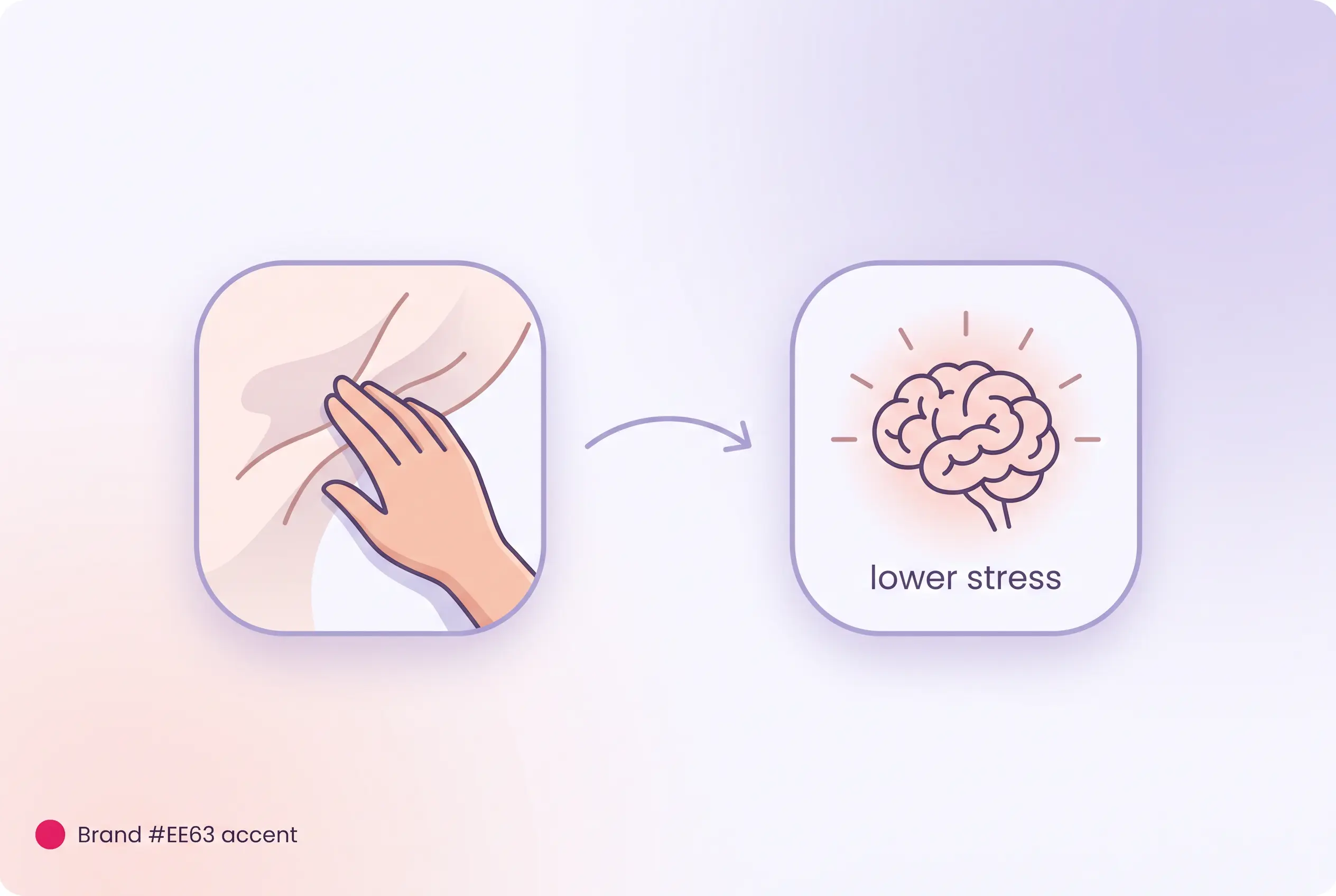
A non-judgmental companion may ease anxious feelings because it removes the fear of judgment that fuels social anxiety, while offering the steadying effects of touch and routine. Two threads help explain why: what comforting touch does to the body, and what predictability does to the mind.
What does touch have to do with stress and oxytocin?
Comforting touch is linked to lower stress hormones and higher bonding hormones. A 2023 study of 247 people found that affectionate touch was associated with lower self-reported anxiety and higher oxytocin, and related work ties supportive touch to lower cortisol. These findings are associational, not proof. One caveat matters for honesty: a 2024 meta-analysis of 137 studies found touch interventions reduced anxiety and depression, yet touch from an object or robot helped noticeably less than touch from another person.
How does a predictable, low-pressure presence help?
Predictability is calming when interaction feels risky. A companion doll is always there, never critical, and never keeps score. For someone with social anxiety, that creates a private, low-stakes space to feel at ease with closeness and even to rehearse conversation without a cost. Some people compare the physical reassurance to a weighted blanket: not a fix, but a steadying presence on a hard night.
The goal is to let that low-stakes comfort spill over into daily life. Feeling calmer and less alone at home can make the next real interaction feel a little less daunting. A doll does not do the social work for you, but for some people it lowers the baseline stress enough to take one small step outward.
Who Might Benefit, and Who Should Be Cautious?
A love doll may suit people who live alone, are grieving, or want a private way to feel companionship, but it becomes risky if it replaces human connection instead of supporting it. The right question is not whether a doll is good or bad, but how it fits into the rest of your life.
Situations where a companion doll may help
- Living alone: steady company during long, quiet stretches at home.
- Grief or a breakup: a comforting presence while adjusting to a sudden absence.
- Rebuilding confidence: a private space to feel at ease with closeness again.
- High social fatigue: connection without the drain of constant performance.
Signs it’s time to seek human or professional support
A doll should add to your support, not become all of it. Consider reaching out for help if a doll starts crowding out every relationship, if your anxiety or mood is getting worse, or if you are pulling away from people you care about. A love doll works best as a complement to human connection and professional help, not a replacement for either.
How Can You Use a Love Doll as Healthy Support (Not a Replacement)?
Used well, a love doll works best as one part of a broader self-care plan: pair it with real-world connection, and choose a material that fits your comfort and budget. The material you pick changes how the doll feels and how much upkeep it needs.
TPE vs. silicone: which fits a companionship goal?

The two main materials feel and behave differently. Here is a quick comparison to help you decide:
| Feature | TPE Love Doll | Silicone Love Doll |
|---|---|---|
| Feel | Softer, more skin-like give | Firmer, holds fine detail well |
| Price | More affordable entry point | Higher cost |
| Maintenance | More porous, needs regular care | Less porous, easier to clean |
| Best for | Cuddling and a plush, huggable feel | Realism and lower upkeep |
For a companionship goal, the soft, skin-like give of TPE makes a doll easy to hug and hold, which is often what people want when the point is comfort rather than realism. If low upkeep and lifelike detail matter more to you, silicone is easier to clean, so it means less worry and a companion that lasts. You can compare both in our range of lifelike silicone companion dolls, or start smaller and simpler with beginner-friendly torso love dolls if space and budget are tight.
Practical details matter more than people expect. A full-size doll needs room to store and a simple cleaning routine to stay hygienic, while a torso is lighter, easier to tuck away, and a lower-commitment first step. Reputable retailers ship in plain, discreet packaging, which removes one more source of worry for anyone who values privacy.
How to keep it a complement to human connection
To keep a doll healthy, treat it as support and not a replacement:
- Keep one real-world tie active: a weekly call, class, or group, however small.
- Set a gentle intention: use the doll to lower anxiety, then take one small social step.
- Watch your mood: if things slide, loop in a therapist or someone you trust.
- Be patient with yourself: progress with social anxiety is slow, and that is normal.

A gentle reminder: starting out, many people feel unsure about whether this is “allowed” or normal. It is a personal choice, and there is nothing shameful about wanting comfort. What matters is that it helps you move toward connection, not away from it.
Frequently Asked Questions
No. A love doll is not a medical treatment and cannot cure social anxiety or any mental-health condition. For some people it may offer companionship as a coping tool. For treatment, consider speaking with a licensed therapist about options like cognitive behavioral therapy.
Attachment can be comforting for some people, especially during loneliness or grief, and research on owners finds many value companionship over sex. It becomes a concern only if it replaces human connection. If you are worried, it is worth talking with a mental-health professional.
They do not have to. Used as a complement to real-world connection, some people report feeling less alone. Used as a total substitute for other relationships, a doll may deepen isolation over time. Balance is the key.
TPE tends to feel softer and costs less, while silicone is more durable and easier to clean. For a companionship focus, pick the texture and budget that feel right for you. Our SweetieDoll guide to choosing a companion doll walks through the trade-offs in more detail.
⚠️ Important Note: A love doll is a companionship product, not a medical device or treatment. The information here is educational and draws on associational research; it cannot diagnose, treat, or cure social anxiety, depression, or any condition. If you are struggling, please talk with a licensed mental-health professional. In the U.S., you can call or text 988 to reach the Suicide and Crisis Lifeline.
Looking for company that meets you where you are?
Explore SweetieDoll’s silicone and TPE love dolls, designed for comfort, realism, and a judgment-free kind of company.Shop SweetieDoll’s love dolls
References
- Social Anxiety Disorder Statistics: Prevalence data for U.S. adults, including past-year and lifetime rates. National Institute of Mental Health (NIMH)
- Our Epidemic of Loneliness and Isolation (2023): The U.S. Surgeon General’s advisory on social connection and its health effects. U.S. Department of Health and Human Services
- Affectionate Touch and Oxytocin: Ecological momentary assessment study linking affectionate touch to hormone and anxiety measures. National Library of Medicine (PMC)
- Anxiety Facts & Statistics: Overview of anxiety disorder prevalence and treatment gaps in the U.S. Anxiety and Depression Association of America (ADAA)