
A love doll wig looks its best when you wash it in cool water, detangle it gently from the ends up, and keep dark dyes away from the TPE skin underneath. Get those three habits right and a synthetic doll wig stays soft and natural for months. Get them wrong, and hot water, a stiff brush, or a bleeding wig cap can ruin both the hair and the skin in a single afternoon.
Table of Contents
This guide covers the full routine: the tools worth owning, how to wash and dry a sex doll wig, how to fix tangling and static, when heat styling is actually safe, and how to stop a dark wig from staining the scalp. We have styled, washed, and occasionally wrecked enough doll wigs to know where the real mistakes happen, so every step below includes the exact temperatures, ratios, and timing that keep a wig looking good. At SweetieDoll, wig care is really about protecting something you paid real money for, so the advice here stays practical instead of fussy.
Why Wig Care Matters for Your Love Doll
Your love doll’s wig is the first thing anyone notices, and it is also the fastest part to ruin. Heat, friction, and loose dye quietly damage both the synthetic fiber and the TPE skin beneath it, often before you spot any problem.
Protect the synthetic fiber
Synthetic fiber cannot heal itself. A melted strand or a matted patch stays that way for good, so prevention matters far more than any rescue trick. Daily wear also creates friction at the nape, where the wig rubs against the neck and shoulders. A well-kept synthetic wig lasts around 4 to 6 months of regular wear, while a neglected one turns dry and tangled much sooner. The first time we restyled a doll wig, we grabbed a regular plastic brush and pulled out a small clump of fiber. Synthetic hair does not grow back, so that patch was simply gone.
Protect the TPE skin
TPE is the soft, slightly porous material most love dolls are made from, and it soaks up dark dye from a wig cap the way a sponge soaks up water. A stain that sinks in can become permanent, which is why wig care and skin care are really the same job. Treat the wig gently, and you also protect the scalp it sits on.
What You Need: Tools and Products for Wig Care
Before you start, gather a wide-tooth comb, a wig stand, sulfate-free wig shampoo, a leave-in conditioner, and a light-colored wig cap. Each one prevents a specific kind of damage, and none of them costs much.
| Tool or product | What it does | Skip it and… |
|---|---|---|
| Wide-tooth comb | Detangles without snapping the fiber | A bristle brush rips out hair |
| Wig stand or foam head | Holds the shape while drying and styling | A wet wig on a flat surface dries matted |
| Sulfate-free wig shampoo | Cleans without drying the fiber | Regular shampoo leaves it brittle |
| Leave-in conditioner | Cuts static and friction | Dry fiber frizzes and tangles |
| Light-colored wig cap | Blocks dark dye from the scalp | A dark cap can stain the TPE |
Combs, brushes, and stands
Reach for a wide-tooth comb or a purpose-made loop brush, never a dense bristle brush that drags through the fiber. A wig stand or a foam head is the other essential, since it lets the wig dry in shape and gives you a stable surface for styling. Both cost very little and save you from the most common damage.
Shampoos, conditioners, and sprays
Stick with a sulfate-free wig shampoo and a synthetic-safe leave-in conditioner, and add an anti-static spray for dry rooms. Fabric softener is a useful extra for a deep detangle soak, which we cover below. A simple kit of a comb, a foam stand, and a couple of light wig caps handles almost everything here. You can pick these up alongside a wig from the love doll wigs and wig caps collection.
How Do You Wash a Love Doll Wig?
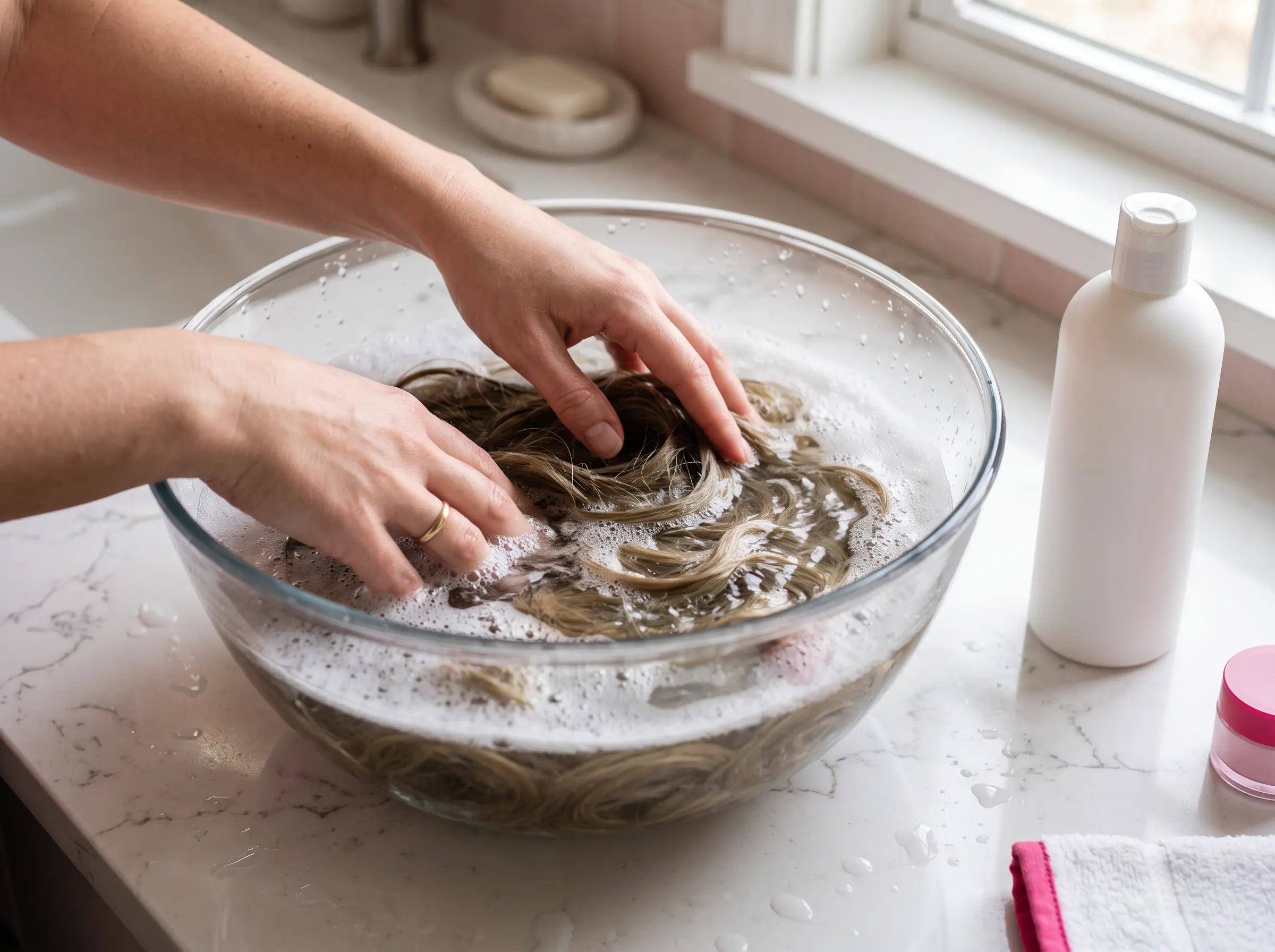
To wash a love doll wig, take it off the head, fill a basin with cool water, add about one tablespoon of sulfate-free wig shampoo, swish gently for one minute, rinse in cool water, blot with a towel, and air-dry on a wig stand. Never use hot water or a blow dryer on synthetic fiber.
Step-by-step washing
- Comb it out first: Take the wig off and gently comb out tangles from the ends up before it ever gets wet.
- Cool water and shampoo: Fill a basin with cool water and mix in about 1 tablespoon of sulfate-free wig shampoo. Cool water protects the synthetic wig, while hot water can permanently frizz or melt the fiber.
- Soak and swish: Submerge the wig and swish it gently for about one minute. Do not rub, wring, or scrub.
- Condition and detangle: Work a little conditioner through the fiber and finger-detangle from the ends up.
- Rinse clean: Rinse in cool water until the water runs clear.
- Blot, do not twist: Press the wig in a towel to soak up water. Wringing stretches and tangles the fibers.
- Air-dry on a stand: Set it on a wig stand and let it air-dry, usually overnight. Skip the blow dryer, the radiator, and direct sun.
Washing mistakes to avoid
Most wash-day damage comes from a handful of habits. Hot water is the biggest one, since it warps synthetic fiber in seconds. Regular human-hair shampoo is the next, because it strips and dries the fiber. Rounding out the list: scrubbing or wringing the wig, drying it with heat or in direct sun, and dragging a comb through it while it is soaking wet. Over-washing also shortens a wig’s life, so you do not need to clean it after every use.
How Do You Detangle and De-Frizz a Doll Wig?
Detangle a doll wig by working from the ends up to the roots with a wide-tooth comb, misting each section with a wig-safe detangling spray so the fibers slide apart instead of snapping. Start at the tips, then move higher once the ends are smooth.
Detangling from the ends up
Take small sections and be patient, since yanking a comb through a knot pulls fiber out for good. For stubborn matting, an optional soak loosens the knots: mix 1 part fabric softener to 3 parts cool water and let the wig sit for about 15 minutes, then comb it through and rinse. Matting almost always starts at the nape, where the wig rubs the neck. We check that spot first, because a small tangle there hardens into a solid mat within a week if you ignore it.
Taming static and frizz
Synthetic fiber builds static in dry air, and flyaways make even a clean wig look rough. A light mist of anti-static spray or a pea-size amount of leave-in conditioner settles the strands, and a quick pass with a slightly damp hand helps in a pinch. Store the wig on a stand rather than stuffed in a drawer, and it holds its shape with far less frizz.
Can You Style or Curl a Synthetic Wig with Heat?
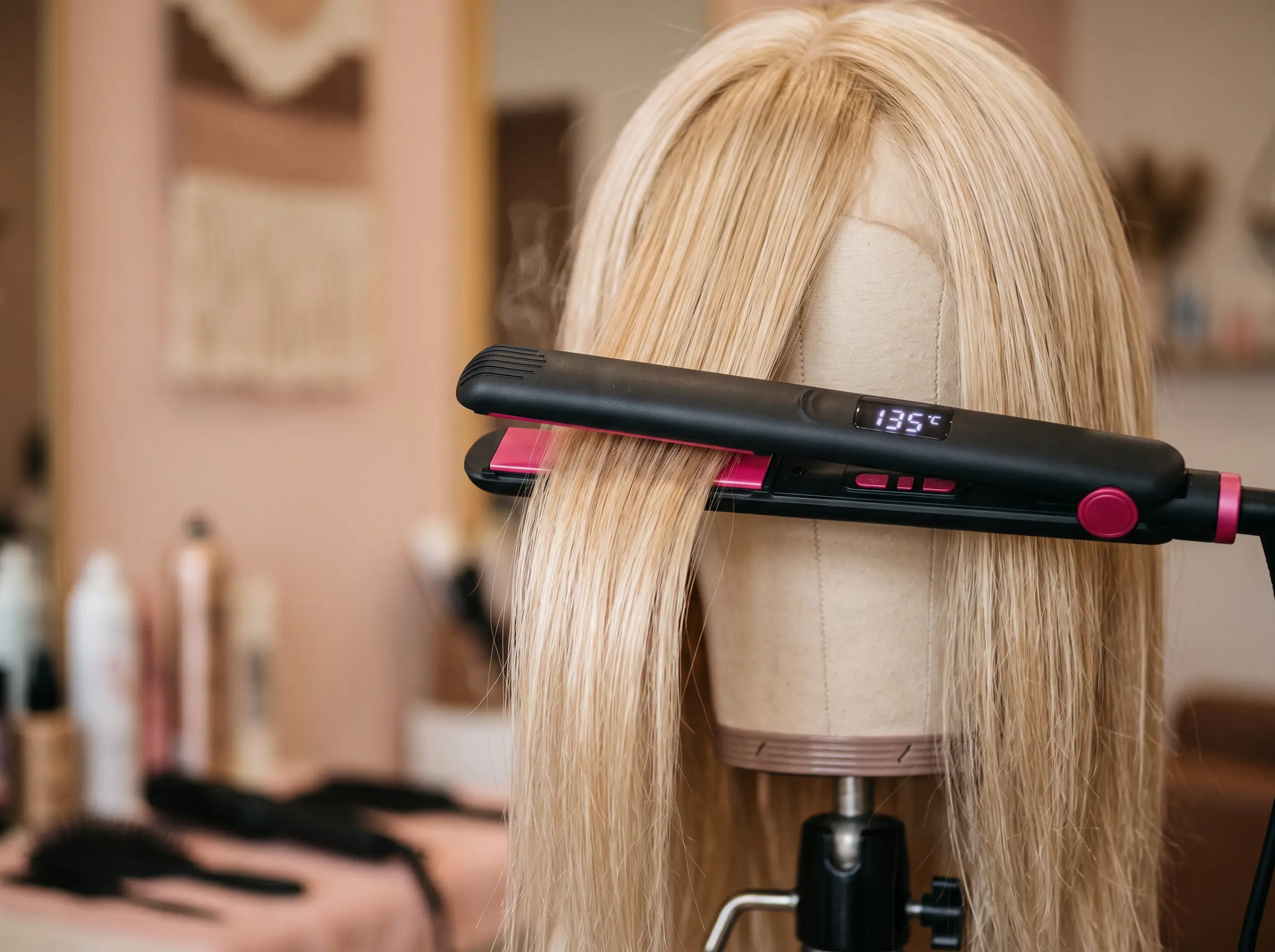
You can heat-style a synthetic doll wig only if it is labeled heat-resistant. Standard synthetic fiber melts under a hot iron, while heat-friendly fibers tolerate up to about 350°F (180°C), so check the label and test a hidden section first.
Heat-resistant vs. standard fiber
The label tells you what you are working with. Heat-resistant fibers, often sold as Kanekalon Excelle or Futura, are marketed as “heat-friendly” and can take a low iron. Standard party-style wigs usually are not, and a hot tool curls them into a melted frizz. When you are unsure, test a small hidden strand on the lowest setting before you touch the rest.
| Fiber type | Heat styling? | Max temperature | Best for |
|---|---|---|---|
| Standard synthetic (not heat-resistant) | No | Avoid heat entirely | Everyday, budget looks |
| Heat-resistant Kanekalon (e.g., Excelle) | Yes, low to medium | Up to 350°F (180°C) | Light restyling, soft waves |
| Heat-friendly Futura fiber | Yes | Up to ~400–410°F (200°C); stay near 180°C | Curls and defined waves |
| Human hair | Yes | Like human hair; always use heat protectant | Frequent restyling |
Temperature limits and technique
Keep the iron on low to medium, work in small sections, and let each section cool fully before you comb it, because synthetic fiber sets its new shape as it cools. Even heat-resistant fiber has a ceiling, and once you push past it the damage is permanent.
A note on heat: Too much heat melts synthetic fiber, and melted fiber cannot be repaired. Start low, test a hidden strand first, and raise the heat only if you truly need to.
How Do You Prevent Dark Wigs from Staining TPE Skin?
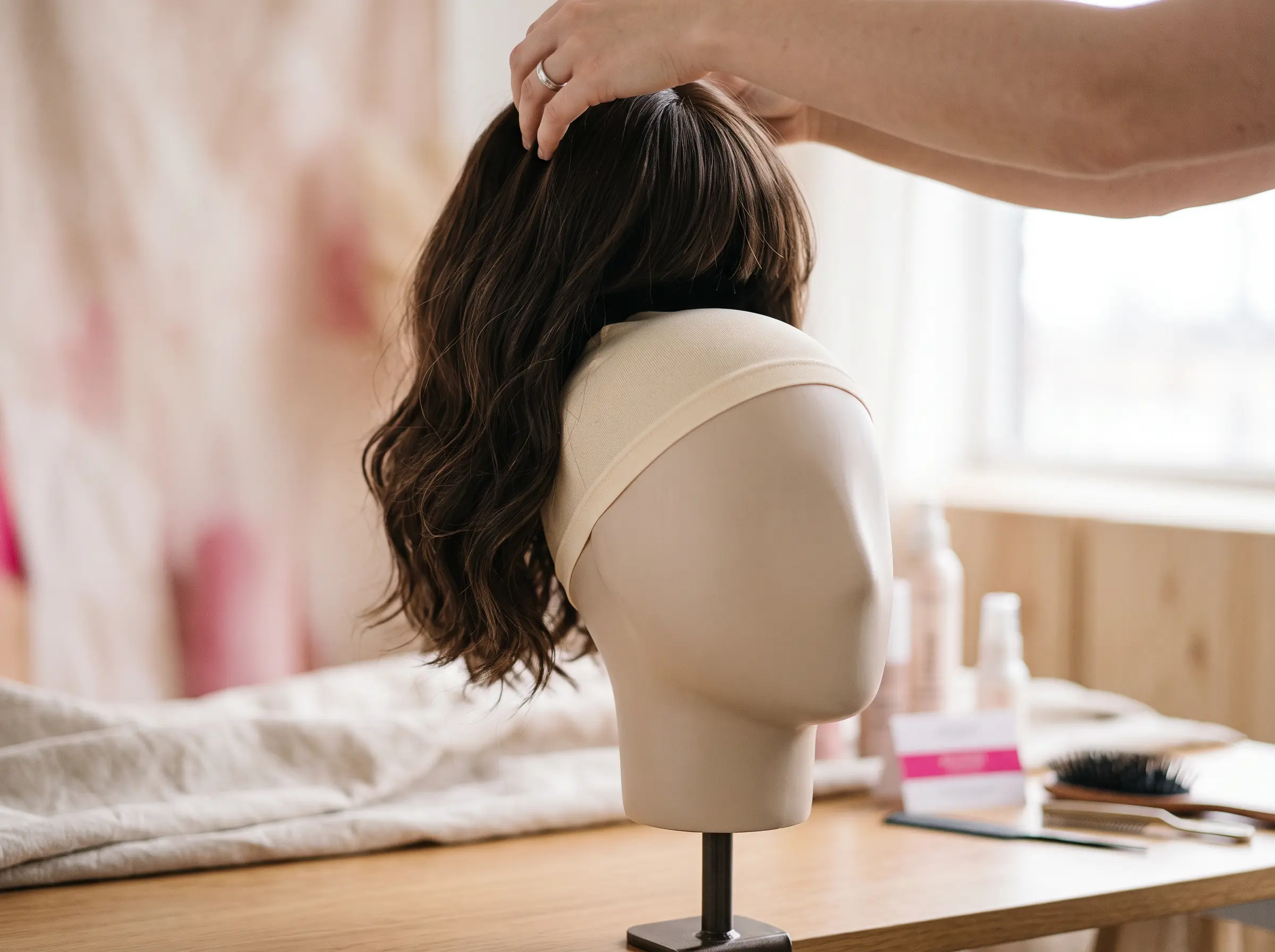
Dark wigs stain TPE because the soft, porous material absorbs loose dye from the wig’s cap and fibers. Prevent it by always using a light-colored wig cap as a barrier, and by taking the wig off during hot, humid storage, when dye moves fastest.
Why dye transfer happens
TPE is porous and slightly tacky, so it draws in loose color from a dark wig cap over time, and that is exactly how dye transfer starts. Heat and humidity speed it up. Above about 86°F (30°C), dye migration runs roughly two to three times faster, which is why a doll left under a wig in a warm closet is most at risk. We have seen owners post photos of a bright cap that left a permanent shadow on a light TPE scalp after a summer in storage. Once color sinks into TPE, pulling it back out is very hard.
Prevention and remediation
Prevention is simple and worth the small effort:
- Use a light-colored wig cap between the wig and the head as a dye barrier.
- Pre-wash a new dark wig in cool water until the water runs clear, so loose dye rinses out before it ever touches the doll.
- Take the wig off for long or hot storage, and keep the doll out of warm, humid spaces.
- Dust the scalp with a little renewal or baby powder to cut the tackiness that holds dye.
If the skin is already stained, wash the area gently, then apply a TPE stain remover in thin layers over a few sessions. Lighter marks often fade, though deep stains may not clear completely, so prevention really does beat repair. The same porous-skin problem shows up with clothing, and our guide on how to keep dark fabrics and dyes from staining TPE skin covers outfits in detail.
Quick tip: A light wig cap plus a gentle TPE stain remover is the cheapest insurance you can buy for a light-skinned doll. Keep both on hand before you put a dark wig on for the first time.
Frequently Asked Questions About Love Doll Wig Care
Every 6 to 8 wears works for most owners. Washing more often than that dries out the fiber and shortens its life. If the wig only sees occasional use, a wash every couple of months is plenty.
It is better to use a sulfate-free wig shampoo. Regular human-hair shampoo strips and dries synthetic fiber, leaving it brittle and frizzy. In a pinch, a small amount of mild, sulfate-free baby shampoo is a safer stand-in than standard shampoo.
Most matting comes from friction at the nape and from combing the fiber while it is dry and knotted. Comb from the ends up, use a leave-in conditioner to cut friction, and store the wig on a stand. A synthetic wig also lasts only about 4 to 6 months of regular wear, so heavy matting can simply mean it is time to replace it.
Sometimes. Take the wig off, wash the area gently, then apply a TPE stain remover in thin layers over a few sessions. Lighter marks often fade, but deep stains may not fully clear. To avoid a repeat, switch to a light wig cap and pre-wash new dark wigs before use.
Keep your doll looking its best
A soft, natural wig and clean TPE come down to a few simple habits and the right basics. Put your care kit together in one place.Shop SweetieDoll wigs and accessories
The bottom line: cool water, gentle combing from the ends up, low heat only on heat-resistant fiber, and a light cap to guard the skin. Fiber tolerances vary by brand, so always follow the care label that comes with your wig.
References
- Synthetic Wig Care: Practical guidance on washing, drying, and storing synthetic wigs, including wash-frequency ranges. Headcovers
- Debunking Wig Care Myths: Why hot water and regular shampoo damage synthetic fiber, and how often to wash. Jon Renau
- Testing Kanekalon and Futura Fibers: Heat-resistance ranges for common synthetic wig fibers. Epic Cosplay
- Hair Care and Styling: Manufacturer guidance on cool-water washing and safe heat settings for Kanekalon fiber. HairUWear