
A curious cat or a bored dog can damage a sex doll in seconds, and the soft skin that makes these dolls feel lifelike is exactly what claws and teeth go for. If you own a love doll and share your home with pets, protecting that investment comes down to four things: smart storage, a protective cover, a little pet training, and choosing the right material from the start.
Table of Contents
At SweetieDoll, we hear the same worry from pet owners again and again. They spend several hundred to a few thousand dollars on a TPE or silicone doll, then watch the family cat study it like a new scratching post. That worry is fair. We have seen dolls come in for repair advice with claw punctures across the thighs and bite marks on the fingers, almost always because the doll was left somewhere a pet could reach it.
Pet damage is preventable, and you do not have to choose between your doll and your animals. This guide covers how cats and dogs actually damage dolls, which material holds up better, where to store your doll so pets cannot reach it, and how to redirect curious pets without hurting them. There is also a short emergency section for the moment every owner dreads, when a dog swallows a piece it never should have. Keep your doll clean, covered, and out of paw’s reach, and it can stay in good shape for years.
Can Pets Really Damage a Sex Doll?
Yes, pets can absolutely damage a sex doll, and the soft TPE or silicone skin is the first thing curious paws and teeth reach for. Cats puncture the surface when they scratch, and dogs chew, bite, and drag the doll across the floor. Because TPE (thermoplastic elastomer) is a soft, porous material with limited tear resistance, a single determined cat can leave permanent marks in one afternoon.
How Cats Damage Dolls
Cats damage dolls mainly through scratching, pouncing, and nesting. A cat’s claws can pierce soft doll skin the same way they shred a couch arm, leaving small punctures that widen with use. Cats also treat a doll lying on a bed as a warm surface to knead and sleep on, so their claws work the skin even when they are not “attacking” it. In our experience, the thighs, chest, and hands take the most damage because they are the flattest, easiest surfaces for a cat to stand on. Loose fur also clings to the skin and works into any textured area, which is annoying to clean but harmless compared with a puncture.
How Dogs Damage Dolls
Dogs damage dolls by chewing, biting, and dragging them, and the fingers, toes, ears, and nose are the usual targets. A dog that chews a doll can tear off small parts, and those parts are the real danger, since a swallowed piece can lead to a choking or intestinal-blockage risk we cover later. Puppies and young dogs are the worst offenders because they explore with their mouths. One thing that surprises owners: it is rarely aggression. Most dogs treat the doll as an oversized plush toy, which is exactly why leaving it on a bed or sofa invites trouble.
Does Material Matter? TPE vs. Silicone Durability Against Pets
Material matters a lot. Platinum-cured silicone resists scratches and tears noticeably better than softer, more porous TPE, which makes it the safer choice for homes with pets. Both materials can be damaged, but they do not hold up equally, and the difference shows fastest around claws and teeth.
| Feature | TPE Doll | Silicone Doll |
|---|---|---|
| Surface | Porous, absorbs fur, oils, and odor | Platinum-cured, non-porous, wipes clean |
| Tear resistance | Lower, punctures and tears more easily | Higher, more resistant to claws and bites |
| Repairability | Small nicks fixable with TPE glue | Fixable with silicone repair compound |
| Cost | More affordable | Higher price, longer lifespan |
Why TPE Is More Vulnerable to Claws and Teeth
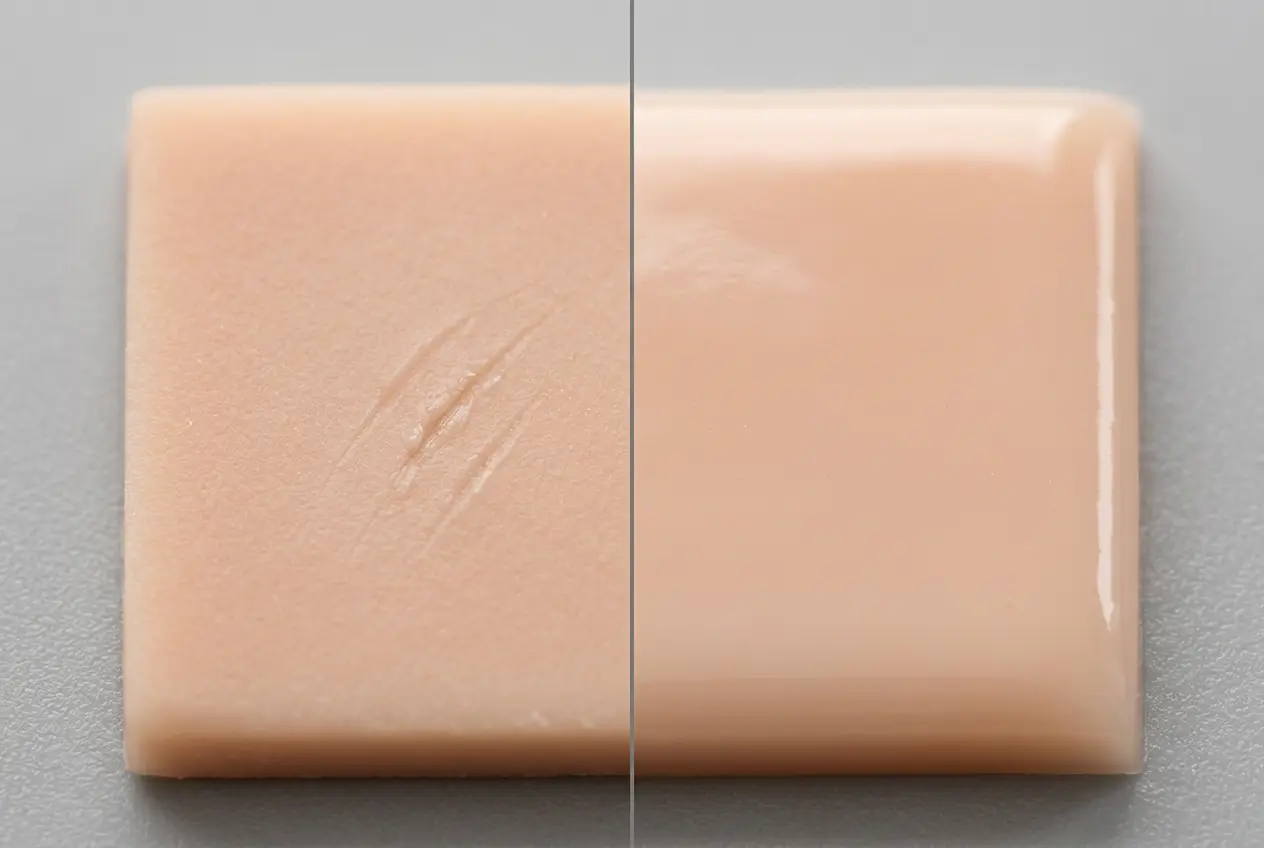
TPE is more vulnerable because it is soft and porous by design, which is also what makes it feel realistic and budget-friendly. That same porosity lets pet claws sink in and traps shed fur and oils near the surface. A cat’s claws can catch and stretch TPE skin before puncturing it, and the small openings left behind are hard to fully clean. If you own a TPE doll and have pets, storage and covers matter even more, because the material gives you less margin for error.
When Silicone Is Worth the Upgrade for Pet Owners
Silicone is worth the upgrade when your household includes an active cat or a young dog. Platinum-cured silicone is non-porous, so it resists punctures better, shrugs off most surface scratches, and wipes clean without trapping fur. For pet owners, that means fewer repairs and a doll that stays presentable far longer, which usually offsets the higher upfront price over the life of the doll. If you are weighing your first purchase around pets, a silicone build is the more forgiving option.
💡 Pro Tip: Shopping with pets in mind? Browse our platinum-cured silicone dolls with better tear resistance for a build that stands up to claws and daily handling.
How to Store Your Doll So Pets Can’t Reach It
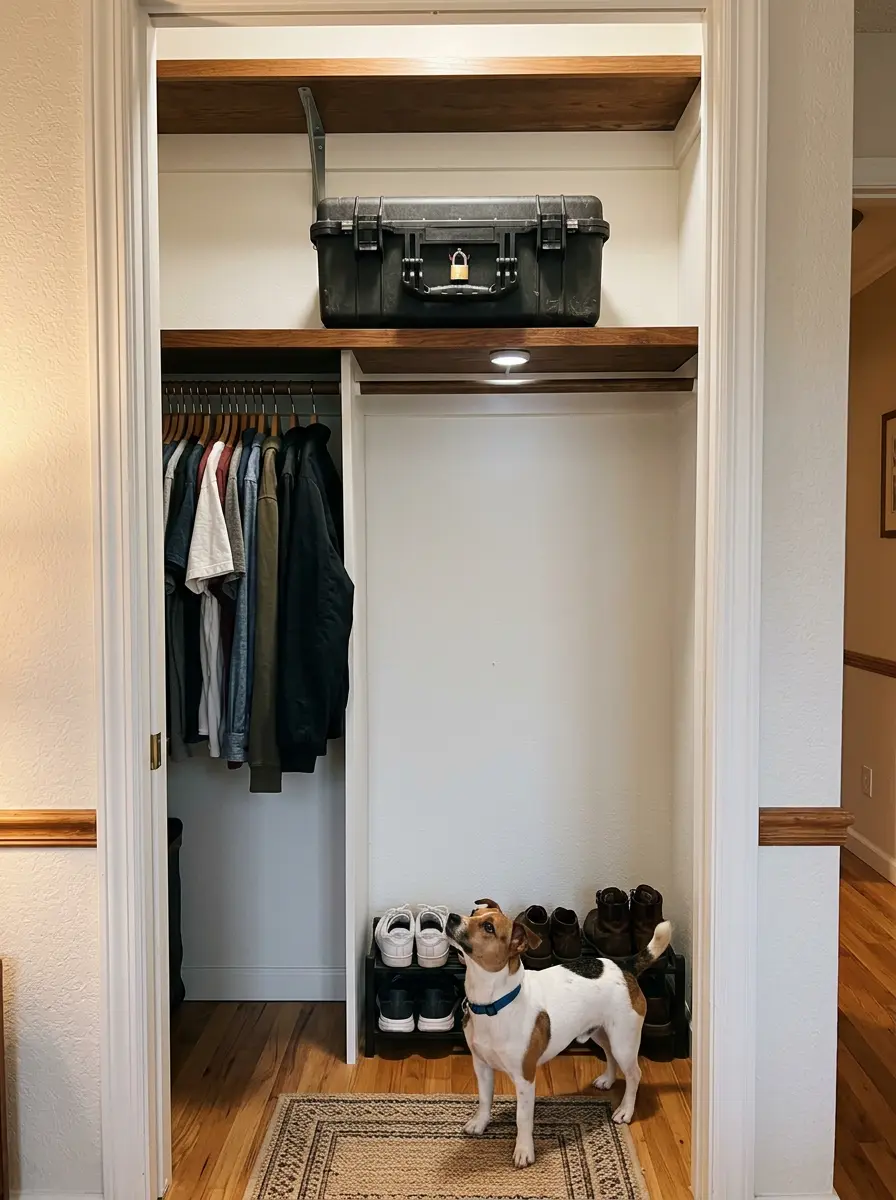
The single most effective way to protect your doll from pets is to store it where they physically cannot reach, ideally a locked case or a high, closed closet, and always off the floor. Storage does more than any deterrent, because a pet cannot damage what it cannot touch. Here is how to pet-proof your doll in five steps:
- Use a locked case or high closet: Store the doll in a lockable storage case or a closed closet shelf that pets cannot open or climb into.
- Add a protective cover: Wrap the doll in a fabric cover or garment bag so claws and fur meet the cover, not the skin.
- Keep it off the floor: Raise the case or bag onto a shelf, since a doll left on the ground is an open invitation to curious paws.
- Control the environment: Keep the storage spot cool and dry, around 68 to 72°F (20 to 22°C) with humidity below 60%, away from direct sunlight.
- Inspect monthly: Every few weeks, check for scratches, dust, or fur, then re-powder a TPE doll to keep the skin smooth.
Locked Cases, High Shelves, and Closets
A locked storage case is the best protection from pets, because it seals the doll away from both claws and teeth in one step. Purpose-built doll flight cases use a rigid outer shell with roughly 2 inches (about 5 cm) of padded foam inside, and many are rated to hold well over 200 lb, so stacking them on a shelf is not a problem. A closet with a door works nearly as well for everyday storage, as long as the shelf sits above jumping height for a cat. Keep the storage area cool and dry, since heat and humidity above 60% can degrade doll skin over time, pets aside.
Hanging vs. Lying Flat vs. Standing (and Keeping It Off the Floor)
You have three storage positions, and the right one depends on your space and your pets. Hanging the doll from a padded hook keeps it fully off the floor and out of a dog’s reach, and it also prevents skin creasing. Lying the doll flat inside a case is simplest for cramped apartments, but never leave it flat on a bed or sofa where a cat will find it. Standing storage using the doll’s foot bolts saves space, though it needs a closed closet so a curious pet cannot knock it over. Whatever you choose, the rule stays the same: keep it raised, covered, and behind a door.
💡 Pro Tip: Pair your doll with the right gear from our discreet doll storage cases and hanging kits to keep it raised, covered, and out of paw’s reach.
Training and Deterrents: Keep Cats and Dogs Away Without Harm
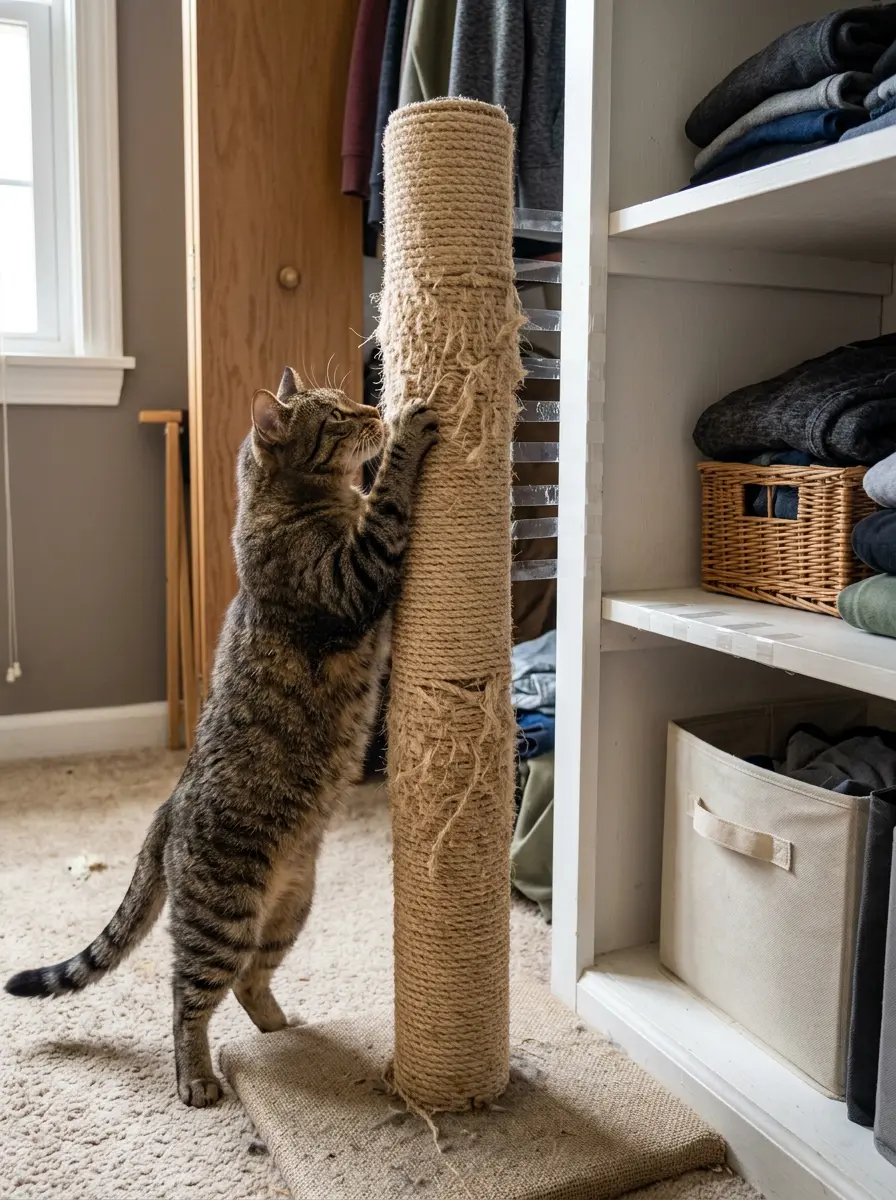
You can teach pets to leave your doll alone using the same vet- and shelter-recommended tactics that protect furniture: redirect, deter, and reward, never punish. Scratching and chewing are normal behaviors, so the goal is to make your doll boring and give your pet a better target instead.
Give Pets a Better Target (Scratching Posts and Chew Toys)
The most reliable fix is redirection, which means offering an appealing alternative right where the problem happens. For cats, place a sturdy scratching post or pad next to the spot they keep going for, then reward them every time they use it. The Humane Society recommends redirecting scratching onto acceptable objects rather than trying to stop it, because scratching is a healthy need cats are highly motivated to meet. For dogs, keep a chew toy nearby and swap it in the instant they show interest in the doll. Consistency does the heavy lifting here. In our experience, owners who reward the right target within the first week see the fastest results.
Safe Deterrents: Tape, Foil, and Scent (What Not to Use)
Safe deterrents make your doll’s storage area unpleasant to touch without hurting your pet. Double-sided tape works because cats dislike the sticky feel on their paws, and pet-safe versions like Sticky Paws come in strips and larger sheets sized to cover flat surfaces. Aluminum foil is a cheap, effective backup, since most cats avoid the texture and sound. A citrus-based deterrent spray near the storage zone adds a scent barrier cats tend to dislike. What not to use: never rely on yelling, spray bottles aimed at the animal, or anything that causes pain or fear, because punishment damages trust and rarely stops the behavior. Deterrents belong on the environment, not on the pet.
Once your doll is stored correctly, keeping it clean is the other half of good care. If fur or dust does build up, follow a gentle routine like the one in our guide to cleaning a TPE sex doll without micro-scratches.
Emergency Tips: What to Do If Your Pet Chews or Swallows a Piece
If your dog swallows a piece of your doll, watch for vomiting, loss of appetite, lethargy, or abdominal pain, and contact your veterinarian promptly, because swallowed TPE or silicone can cause an intestinal blockage. This protects your pet as much as your doll, so handle the animal first and the doll second.
If Your Pet Swallows a Fragment (When to Call the Vet)
Call your veterinarian right away if your pet swallows any doll fragment and then shows warning signs. According to Cornell University’s Riney Canine Health Center, common signs of a gastrointestinal foreign-body obstruction include vomiting, loss of appetite, abdominal pain, diarrhea, dehydration, and lethargy. Some objects pass on their own, but others lodge in the stomach or intestines and become a medical emergency, and every hour counts once symptoms appear. Do not try to force your pet to vomit unless a veterinarian tells you to, since that can make certain situations worse. When in doubt, a quick call to your vet or an emergency clinic is always the safe choice.
⚠️ Important Note: This section is general safety information, not veterinary advice. If you think your pet has swallowed something, contact your veterinarian or a local emergency clinic immediately. Only a veterinarian can assess your specific animal.
Repairing Scratches and Bite Marks (TPE vs. Silicone)
Once your pet is safe, most surface damage is repairable at home. Shallow scratches and small nicks in a TPE doll can be smoothed with a dab of TPE-specific glue, then lightly re-powdered so the patch blends in. Silicone punctures need a silicone repair compound instead, since the two materials do not bond to each other. Deep tears, damage near a joint, or anything structural is worth a message to customer support before you attempt a fix, because the wrong repair can make things harder to correct later. Keep a small repair kit on hand so a minor bite mark never turns into a bigger problem.
💡 Pro Tip: Keep our doll renewal powder and repair kit within reach so small scratches and bite marks are quick to fix at home.
Frequently Asked Questions
Yes. Cats can puncture soft TPE skin with their claws, and dogs can chew or tear off small parts, sometimes swallowing pieces that pose a choking or intestinal-blockage risk. Storing your doll out of reach prevents nearly all of it.
Platinum-cured silicone holds up best against pets. It is non-porous and more tear-resistant than TPE, so it resists scratches and cleans up without trapping fur. TPE is softer and more affordable but needs more careful storage.
Redirect and deter rather than punish. Put a scratching post next to the problem spot and reward its use, then make the doll’s storage area unpleasant with double-sided tape or foil. Above all, store the doll in a closed closet or case so your cat never reaches it.
Watch for vomiting, loss of appetite, lethargy, or abdominal pain, and call your veterinarian promptly. Swallowed TPE or silicone can cause an intestinal blockage. Do not induce vomiting unless a vet instructs you to.
Keep Your Doll Safe for the Long Run
Smart storage, the right cover, and a pet-friendly material keep your doll in great shape for years. Explore SweetieDoll’s doll care and storage collection to protect your investment.Shop Doll Care & Storage →
📚 References
- Gastrointestinal Foreign Body Obstruction in Dogs: Clinical signs, diagnosis, and why prompt care matters when a pet swallows an object. Cornell University Riney Canine Health Center
- Ingestion of Foreign Bodies in Dogs: Which swallowed objects pass safely, which require surgery, and the warning signs to watch for. VCA Animal Hospitals
- How to Stop Destructive Cat Scratching: Why cats scratch and how to redirect the behavior onto a scratching post without punishment. The Humane Society of the United States
- Gastrointestinal Foreign Bodies in Cats and Dogs: Veterinary overview of blockage signs, treatment, and prevention for pet owners. MedVet