
Mold on a sex doll almost always starts with one thing: trapped moisture. Get the drying and humidity right, and mold rarely gets a foothold, even on porous TPE. That single fact is the whole strategy, and this guide turns it into a routine you can actually follow.
Table of Contents
Here is the short version. Dry your doll fully within 24 hours of every wash, keep the air around it below 50% relative humidity, and store it somewhere cool, dark, and ventilated. Do those three things and you protect both your health and an investment that often runs past $1,000.
At SweetieDoll, after helping thousands of owners care for TPE and silicone dolls, we see the same problem repeat. People clean carefully, then let moisture sit inside a cavity or seal a slightly damp doll in a bag. Days later, a musty odor or a dark spot appears, usually somewhere they could not see. It is frustrating, and it is almost entirely preventable.
Mildew needs moisture, warmth, and a food source, and a damp doll can supply all three at once. The good news is that you only have to remove one leg of that triangle, and moisture is the easiest to control. This guide focuses there: how humidity feeds mold, how to dry every part of your doll, and how to store it so dampness never builds up. This is general care guidance, not medical advice.
Why Mold Grows on a Sex Doll, and Why TPE Is Most at Risk
Mold grows on a sex doll when moisture stays trapped against the material, and TPE is the most at risk because it is porous. Water sinks into the tiny pores, sits there, and gives mold spores the damp surface they need. Non-porous silicone gives moisture nowhere to hide, which is why it resists mold far better.
What Mold and Mildew Actually Need to Grow
Mold and mildew need three things together: moisture, warmth, and an organic food source. On a doll, that food source is everyday residue such as body fluids, lubricant, skin oil, and dust. High humidity plus that residue is exactly what lets mildew take hold, so wiping a doll clean is only half the job. If you also remove the moisture, the spores have nothing to grow on and the chain breaks.
TPE vs Silicone: Which Molds More Easily
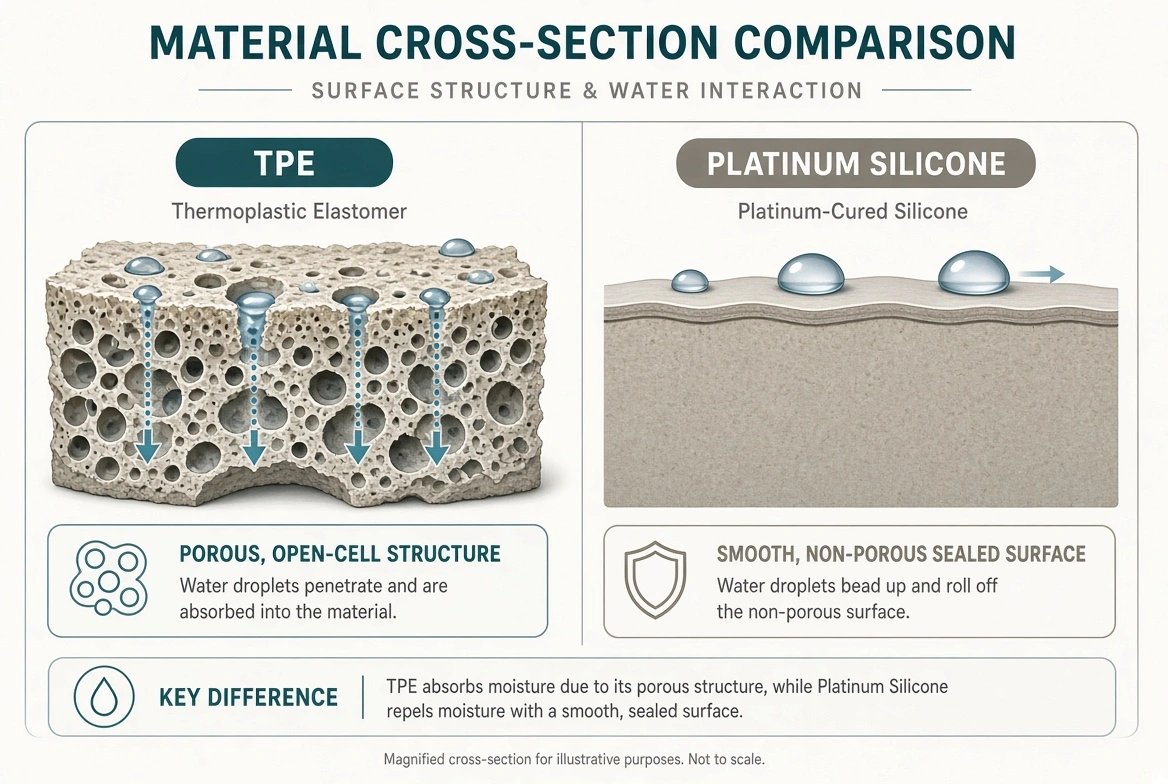
TPE molds more easily than silicone because it is porous and absorbs moisture, while platinum silicone is non-porous and wipes clean. Both materials are body-safe, but they behave very differently once water is involved.
| Feature | TPE | Platinum Silicone |
|---|---|---|
| Surface | Porous, microscopic pores | Non-porous, sealed |
| Moisture behavior | Absorbs and holds water | Beads on the surface |
| Mold risk | Higher, needs careful drying | Lower, easy to sanitize |
| Feel | Softer, stretches 6 to 8 times its length | Firmer, stretches 3 to 5 times |
| Typical lifespan | 1 to 3 years with regular use | 5 to 10 years with basic care |
The takeaway is simple. TPE rewards you with a soft, skin-like feel, but that softness comes from a porous surface that traps moisture, so drying discipline matters more. If you want the full breakdown of how TPE and silicone differ in porosity and care, we cover it separately. Whichever you own, the prevention steps below apply.
The Humidity Sweet Spot: What Level Stops Mold
Keep the air around your doll below 50% relative humidity. The U.S. EPA advises keeping indoor humidity under 60%, ideally between 30% and 50%, because mold struggles to establish once the air stays that dry. Humidity, not the odd splash of water, is what quietly feeds mildew over weeks.
The 30 to 50 Percent Rule, Straight From the EPA
The EPA recommends indoor relative humidity of 30% to 50%, and no higher than 60%. You do not have to guess your level. A humidity meter, a small instrument that reads the moisture in the air, costs about $10 to $50 at most hardware stores, per the EPA. Set it in the room where you store your doll and check it now and then, since humidity shifts through the day. A comfortable room temperature of 60 to 77°F (15 to 25°C) works well alongside that range. If the reading climbs, an air conditioner or a small dehumidifier brings it back down fast.
Humid Climates: Gulf Coast, Pacific Northwest, and Basements
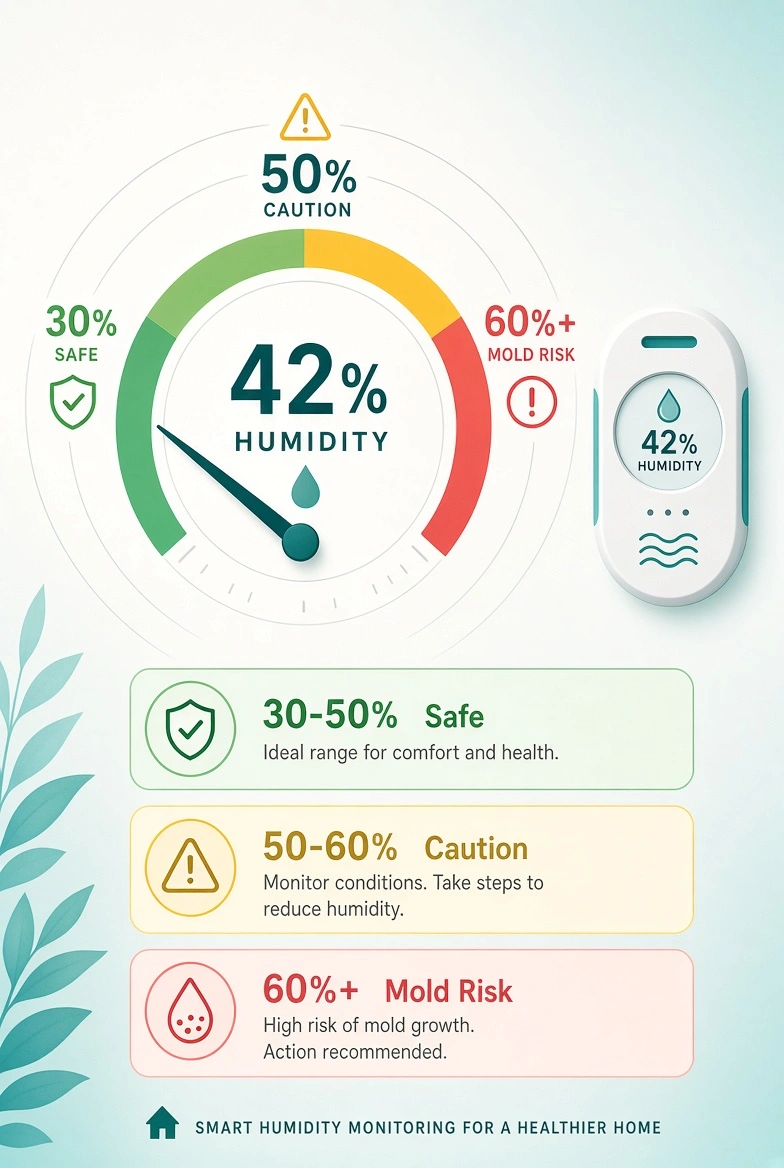
In humid regions, controlling the room matters as much as drying the doll. Summer heat, coastal air, rainy seasons, and below-grade rooms all push humidity past the safe line. Match your situation to the fix below.
| Your situation | Why it raises risk | What to do |
|---|---|---|
| Gulf Coast or Florida summer | Warm, damp air stays above 60% for months | Run a dehumidifier, keep AC on, check the meter weekly |
| Pacific Northwest rainy season | Long wet stretches keep indoor air damp | Add a dehumidifier and improve airflow in the storage room |
| Basement or closet storage | Little airflow, moisture pools and lingers | Add silica gel packs, leave a gap for air, avoid the floor |
| Dry inland home | Low baseline risk | Normal drying and a monthly humidity check are enough |
Simple upgrade: For a humid room, a couple of dollars of silica gel plus a small dehumidifier does most of the work. You can pick up drying sticks, renewal powder, and storage cases in one place.
How to Dry Your Doll So Mold Never Starts
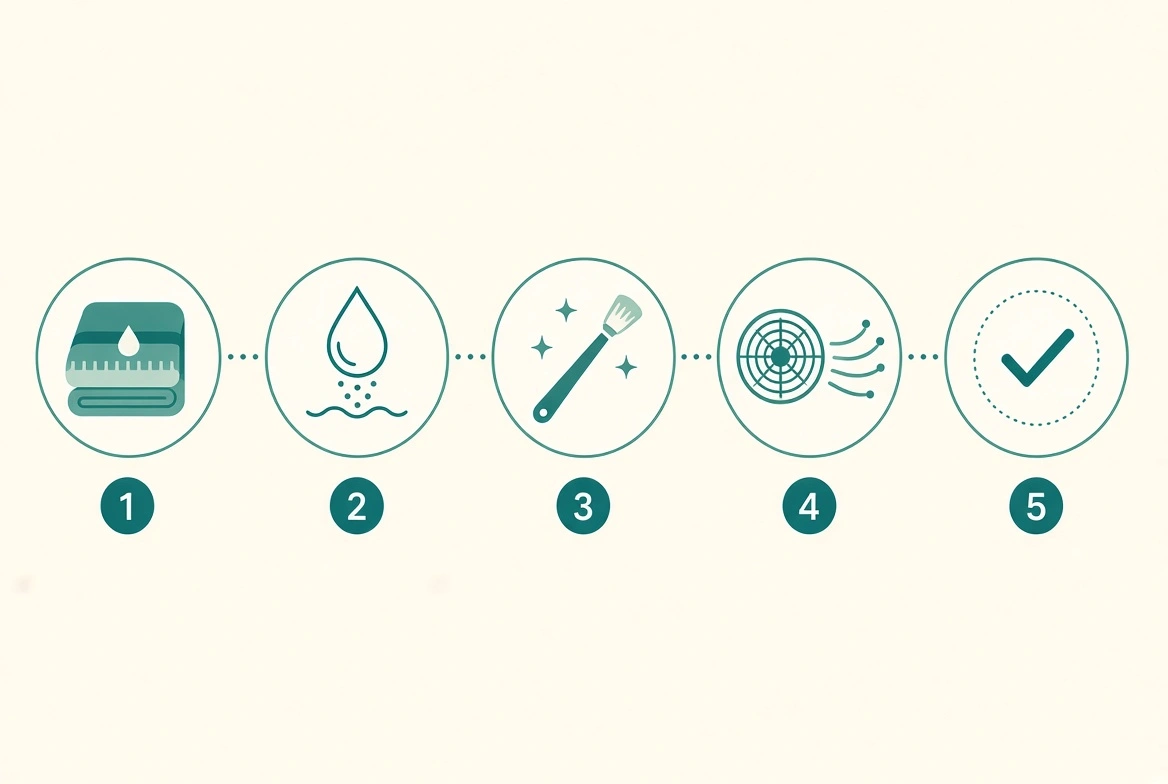
To prevent mold, dry your doll within 24 hours of every wash. Pat the surface with a lint-free towel, wick each cavity with an absorbent drying stick, then let it air-dry in a room below 50% humidity. The EPA notes that damp items dried within 24 to 48 hours usually will not grow mold, so speed is your best defense.
- Blot the surface: press a clean lint-free or microfiber towel over the skin for 2 to 3 minutes. Do not rub, which can scuff soft TPE.
- Drain the cavities: stand or tilt the doll so gravity pulls water out, about 5 to 10 minutes.
- Wick the inside: insert an absorbent drying stick into each cavity for 10 to 15 minutes to pull out trapped moisture.
- Air-dry fully: leave the cavities open to the air for a few hours in a room kept below 50% humidity.
- Confirm it is dry: check that folds and openings feel completely dry before you dress or store the doll.
Drying the Surface, Pat Don’t Rub
The surface is the easy part, and patting beats rubbing every time. Use a lint-free or microfiber towel, since paper towels shed fibers that can cling to the skin. Blot along the folds behind the knees, elbows, and neck, where water likes to sit. The surface usually feels dry within a few hours in a well-ventilated room.
Drying the Cavities, the Step Most Owners Skip
The inside is where mold actually starts, because a narrow cavity can stay damp long after the skin feels dry. In our experience, this is the single step new owners skip, and it is the one that causes most mildew. Here is the honest catch: a cavity can feel dry to the touch and still hold moisture a full day later. That hidden dampness is exactly what mold needs.
An absorbent drying stick, made from a material that pulls water out of tight spaces, does the work in about 10 to 15 minutes, and gentle airflow finishes the cavity in roughly an hour. Never use a hair dryer on hot air, since high heat can damage both TPE and silicone. Cool air or a fan at a distance is safe. For the complete washing and drying routine from the first step, see SweetieDoll’s complete cleaning and care guide.
Storing Your Doll to Keep It Dry and Ventilated
Store your doll in a cool, dark, well-ventilated spot, and never sealed in a plastic bag where trapped humidity feeds mildew. Storage is where a small amount of leftover moisture turns into a real problem, because the doll sits untouched for days or weeks. Good ventilation lets any remaining dampness escape instead of pooling against the skin.
The Right Spot: Closet, Bedroom, or Basement
A cool, dark bedroom closet is usually the best home for your doll. Aim for 60 to 77°F (15 to 25°C), away from direct sunlight, which can degrade the material over time. Basements and attics are riskier, since they trap moisture and swing in temperature. If a basement is your only option, lift the doll off the floor, leave room for air to move, and add silica gel to soak up dampness.
Containers That Breathe, and the Plastic-Bag Mistake
Choose a breathable storage case or a hanging kit, not a sealed plastic bag. A sealed bag locks in whatever moisture is left and creates the warm, damp pocket mildew loves. A padded case stores the doll flat and protects it from creases, while a hanging kit keeps the body straight and open to the air. Keep dark or dyed fabric off the skin too, since some dyes can stain TPE. New buyers can find more first-buyer cleaning, drying, and storage basics in our beginner guide.
Powder, Airflow, and a Prevention Routine That Sticks
A light dusting of renewal powder after each full dry keeps TPE dry to the touch and helps the surface shed moisture instead of holding it. Powder is not just for feel. It leaves the skin matte and less sticky, which makes trapped dampness far less likely between uses.
How Often to Powder, and What Powder to Use
Powder your doll after every full wash and dry, once the skin is completely dry. Use a purpose-made renewal powder or plain cornstarch, applied thinly with a soft brush or cloth. Skip talc-heavy products and anything scented. The goal is a light, even coat, not a caked layer, since too much powder can clog the surface.
The Monthly Two-Minute Mold Check
Give your doll a two-minute check every two weeks to a month, even when it is in storage. A quick check beats a ruined doll, and it costs almost nothing. Open the storage case, smell for any musty odor, and look over the cavities and folds where mildew starts. If everything is dry and odor-free, you are done. If you notice dampness, air the doll out and dry it again before it becomes a problem.
Found Mold Already? What You Can Save and What You Can’t
Surface mold on smooth skin can usually be washed off and fully dried, but mold that has penetrated the material or grown deep inside a cavity means it is time to replace the doll. The deciding factor is whether the mold sits on top of the surface or has worked its way in.
Surface Mold: Clean, Dry, and Monitor
For a small spot on the outer skin, clean it gently with warm water and a mild antibacterial soap, rinse, and then dry the area completely using the steps above. Powder it once dry, and keep an eye on the spot over the next few weeks. If it does not return, the doll is fine to use.
When to Let Go: Penetrated or Internal Mold
Some mold cannot be cleaned safely, and forcing it is not worth the risk. Replace the doll if you see any of these signs:
- Mold inside a cavity that you cannot fully reach, clean, and dry.
- Dark staining under the surface that does not lift with cleaning.
- A musty odor that lingers after a thorough clean and dry.
- Spreading spots that keep coming back in the same place.
⚠ A quick health note: Per the CDC, mold can cause a stuffy nose, sore throat, coughing or wheezing, burning eyes, or a skin rash in some people. Those with asthma or a mold allergy may react more strongly, and people with weakened immune systems or chronic lung disease can develop lung infections from mold. A lingering musty smell is a useful warning sign. This is general information, not medical advice. If you have health concerns, talk to a healthcare professional.
When it is time for a fresh start, a non-porous silicone model is worth a look for its easier upkeep. You can browse SweetieDoll’s full sex doll collection by material and care preference.
Keep Your Doll Fresh, Clean, and Mold-Free
The right drying and storage tools make prevention almost effortless. Set your routine up once and protect your doll for years.Shop Drying & Care Tools Browse Dolls by Material
Frequently Asked Questions
Yes, especially porous TPE. Trapped moisture in cavities and folds is the usual cause. Keeping your doll dry and stored below 50% humidity prevents it in almost every case.
The surface dries in a few hours, but a narrow cavity can stay damp for a full day. Use an absorbent drying stick plus airflow to finish the inside in about an hour, and aim to have the doll fully dry within 24 hours.
The EPA recommends indoor relative humidity of 30% to 50%, and no higher than 60%. At those levels, mold struggles to grow on a clean, dry doll. A hardware-store humidity meter lets you check your room.
Surface mold that has been cleaned and fully dried is generally low risk for healthy users. Replace any doll with mold that has penetrated the material or grown deep inside a cavity. Per the CDC, people with asthma, allergies, or weakened immune systems can react more severely. This is general guidance, not medical advice.
📚 References
- Indoor Humidity and Mold Prevention: Official guidance on keeping indoor relative humidity between 30% and 50%, drying wet items within 24 to 48 hours, and using a low-cost humidity meter. U.S. EPA, A Brief Guide to Mold, Moisture and Your Home
- Health Effects of Mold Exposure: Overview of common mold-related symptoms and higher-risk groups, including people with asthma, allergies, or weakened immune systems. CDC, About Mold
- Relative Humidity and Mold Growth: Technical explanation of why indoor relative humidity should stay below 60% to limit mold and dampness. U.S. EPA, Mold Course Chapter 2