
Using the wrong method can ruin your doll’s wig in a single wash, leaving you with a frizzy, tangled mess that no amount of brushing will fix. The good news is that caring for a doll wig is simple once you know the rules, and this guide walks you through washing, detangling, styling, and storing it the right way.
Table of Contents
Here is the short version. Wash your doll’s synthetic wig in cool water between 60-85°F with a small drop of wig shampoo, never hot water. Detangle it dry with a wide-tooth comb, working from the ends up. Air-dry it on a wig stand instead of using a blow dryer, and only apply heat if the fibers are labeled heat-resistant. Do that, and a good wig will stay soft and natural-looking for years.
At SweetieDoll, we care for our own dolls’ wigs the same way we are about to show you, and we have tested these steps on both standard and heat-resistant synthetic hair. Most doll wigs are made from synthetic fiber, a man-made hair fiber like Kanekalon that holds its shape well but behaves very differently from human hair. Treat it like human hair and you will melt, frizz, or shed it fast.
If you just received your first doll, start with our beginner’s guide to choosing your first doll for the basics, then come back here for wig care. Whether your wig is brand new or already matted, the routine below will bring it back to life.
What you’ll need
- A wide-tooth comb or a proper wig brush
- Wig shampoo, or a gentle sulfate-free baby shampoo
- Synthetic hair conditioner, or liquid fabric softener
- A clean basin or sink and a soft towel
- A wig stand or a foam mannequin head
Total time: about 20 minutes of hands-on work, plus a few hours of air-drying.
Know Your Doll’s Wig Fiber Before You Start
Before any water touches it, identify what your doll’s wig is made of, because standard synthetic fiber melts above 180°F while human hair and heat-resistant fiber tolerate far more heat. This one detail decides whether you can use a curling iron or must stick to cool water and air-drying. Get it wrong and the fiber is ruined for good.
Synthetic (Kanekalon and Toyokalon) vs. Human Hair
Most doll wigs use synthetic fibers such as Kanekalon and Toyokalon, modacrylic fibers spun to look and feel like hair. Kanekalon fiber holds a preset curl or wave permanently, because heat is used to lock the style in during manufacturing. That is why a synthetic wig keeps its shape wash after wash, but also why household heat can distort it.
Human hair doll wigs are rarer and more expensive. They can be heat-styled and even dyed like real hair, but they need far more upkeep. The table below sorts out which fiber you are working with and how it changes your care routine.
| Fiber type | Heat tolerance | Best for | Care notes |
|---|---|---|---|
| Standard synthetic (Kanekalon, Toyokalon) | Melts above 180°F. No heat tools. | Holding one fixed style | Cool wash and air-dry only |
| Heat-resistant synthetic (Futura-type) | Rated to about 350°F. Low heat only. | Restyling curls or waves | Keep tools under 280°F, work fast |
| Human hair | High, like real hair | Full styling and coloring | Most maintenance, highest cost |
How to Tell If Your Wig Is Heat-Resistant
Check the product label or listing first, since heat-resistant fiber is almost always advertised as a selling point. If nothing says so, run a quick test: touch a warm flat iron to a single strand hidden at the nape. Standard fiber will singe, curl, or melt on contact, while heat-resistant fiber stays intact.
We first assumed all synthetic wigs could handle a curling iron. They cannot. One standard Kanekalon strand fused into a hard clump the moment a 300°F iron touched it, and there was no undoing it. When you are unsure, assume the fiber is not heat-resistant and skip the heat entirely.
Detangle First: Gently Loosen Every Knot
Always detangle a doll’s wig while it is completely dry, starting at the ends and working upward in 1-inch sections with a wide-tooth comb. Wet synthetic fiber is weaker and sheds more, so combing it dry protects both the strands and the cap. Rushing this step is the fastest way to create frizz you cannot brush out.
Pre-Detangling Dry With a Wide-Tooth Comb
Hold the wig by its cap so you are not pulling against the roots. Mist the hair lightly with water or a leave-in spray to reduce static, then comb the ends first and slowly move up toward the cap. A wide-tooth comb separates matted fibers without stretching them, which prevents the frizz that fine bristle brushes create on synthetic hair.
The comb itself matters more than people expect. Its rounded, widely spaced teeth glide through knots instead of snagging them, so you detangle without breakage and lose far fewer fibers. That means a smoother wig that lasts noticeably longer.
Rescuing a Matted Nape
The nape, the underside at the back of the wig, mats the most because it rubs against the neck and shoulders. Work it in small sections, add a little conditioner or a fabric-softener spray to loosen the felt, and comb from the tips upward. The fix here is patience: put the wig down, take one section at a time, and do not yank.
One honest limit worth knowing. Detangling revives a matted wig, but it cannot repair fiber that has already been melted or heat-damaged. If strands are fused or crispy, no amount of combing will bring them back, and a replacement is the only real fix.
Wash the Wig the Right Way
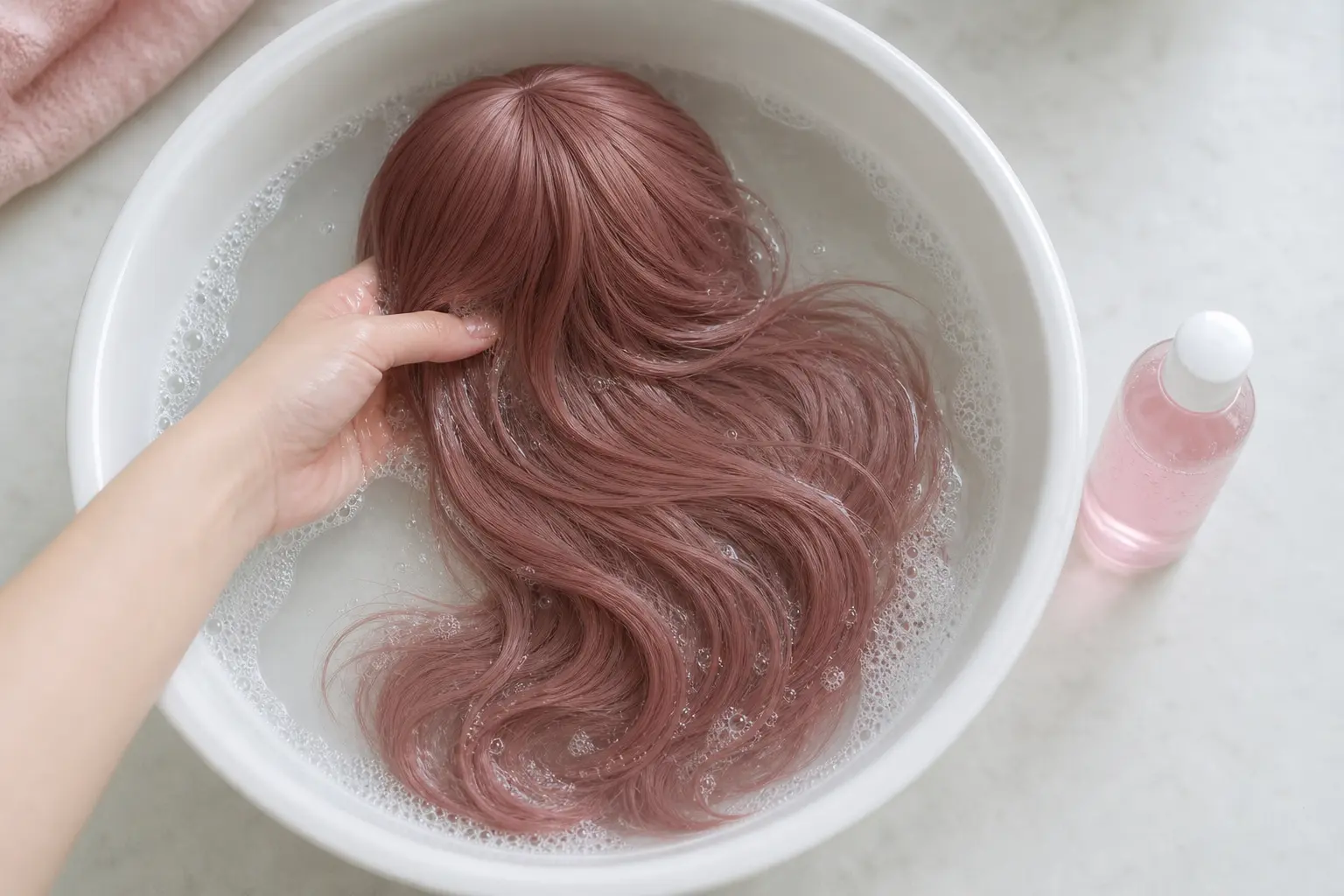
To wash a doll’s wig, pre-detangle it, then soak it for about 5 minutes in a basin of cool water between 60-85°F with a dime-size drop of wig shampoo. Swish gently, rinse in cool water, add conditioner, rinse again, then pat dry and lay it on a wig stand to air-dry. Never use hot water on synthetic fiber, since heat permanently warps the style.
Follow these six steps in order:
- Detangle the dry wig fully with a wide-tooth comb before it gets wet.
- Fill a basin with cool water at 60-85°F and mix in a dime-size drop of wig shampoo.
- Submerge and swish the wig gently for about 30 seconds. Do not scrub, twist, or wring it.
- Soak for 5 minutes, then rinse under cool running water until the water runs clear.
- Apply conditioner from mid-length to the ends, avoid the cap, wait 5 minutes, then rinse.
- Press out excess water with a towel and move the wig to a stand to air-dry.
In our experience, the single biggest wash mistake is scrubbing. Synthetic fiber has no natural oils to protect it, so friction just grinds in permanent frizz. Cool water and a gentle swish are all a synthetic wig ever needs.
Water Temperature and Wig Shampoo
Cool water is not a suggestion, it is the rule. Hot water above roughly 180°F relaxes the curl pattern set into synthetic fiber and warps the style for good, which is why 60-85°F is the safe range. Regular human shampoo is a second common trap, because it strips the fiber and makes it fluff up. Use a dedicated wig shampoo or a gentle baby shampoo instead. You can find synthetic-safe cleaners among SweetieDoll’s doll care accessories.
How Often to Wash It
Wash a doll’s wig every 6-8 wears, which works out to about once every two weeks with daily use, and roughly once a month for a wig kept mostly on display. We have found that washing more often than every 6-8 wears does more harm than good, because each wash dulls the fiber a little. Spot-clean small areas between full washes when you can.
Condition and Soften Dry or Stiff Fibers
To soften a stiff or crunchy synthetic wig, soak the clean, damp wig for 5-10 minutes in cool water mixed with conditioner, or use a diluted fabric-softener rinse. Both methods coat the strands and restore the slip that old or over-washed fiber loses. This is the step that turns a scratchy wig back into a soft one.
Conditioner Soak (5 to 10 Minutes)
After washing, a conditioner soak brings back movement. Work a synthetic-safe conditioner through the mid-lengths and ends, then let the wig sit in cool water for 5-10 minutes, or overnight if it is badly matted. A conditioner soak coats each synthetic strand with a thin lubricating film, which cuts static and makes the next detangle much easier.
The Fabric-Softener Method: Dilution and Timing
Liquid fabric softener is a well-known rescue trick for stiff synthetic hair. Mix about one capful into a basin of cool water, submerge the wig, soak it for about 10 minutes, then rinse thoroughly and air-dry. The softener relaxes and smooths the fiber, reducing that crunchy, plasticky feel.
Here is what to expect from it. A stiff display wig we soaked for 10 minutes in diluted fabric softener came out clearly softer and easier to comb. The effect fades after a few washes, though, so treat it as a refresh rather than a permanent fix.
Dry, Then Style Within Heat Limits
Never use a blow dryer on standard synthetic fiber. Air-dry the wig on a wig stand, and only heat-style it if the wig is clearly labeled heat-resistant, using low heat under 280°F. Drying and styling are where most wigs get accidentally destroyed, so slow down for this part.
Pat Dry and Air-Dry on a Stand
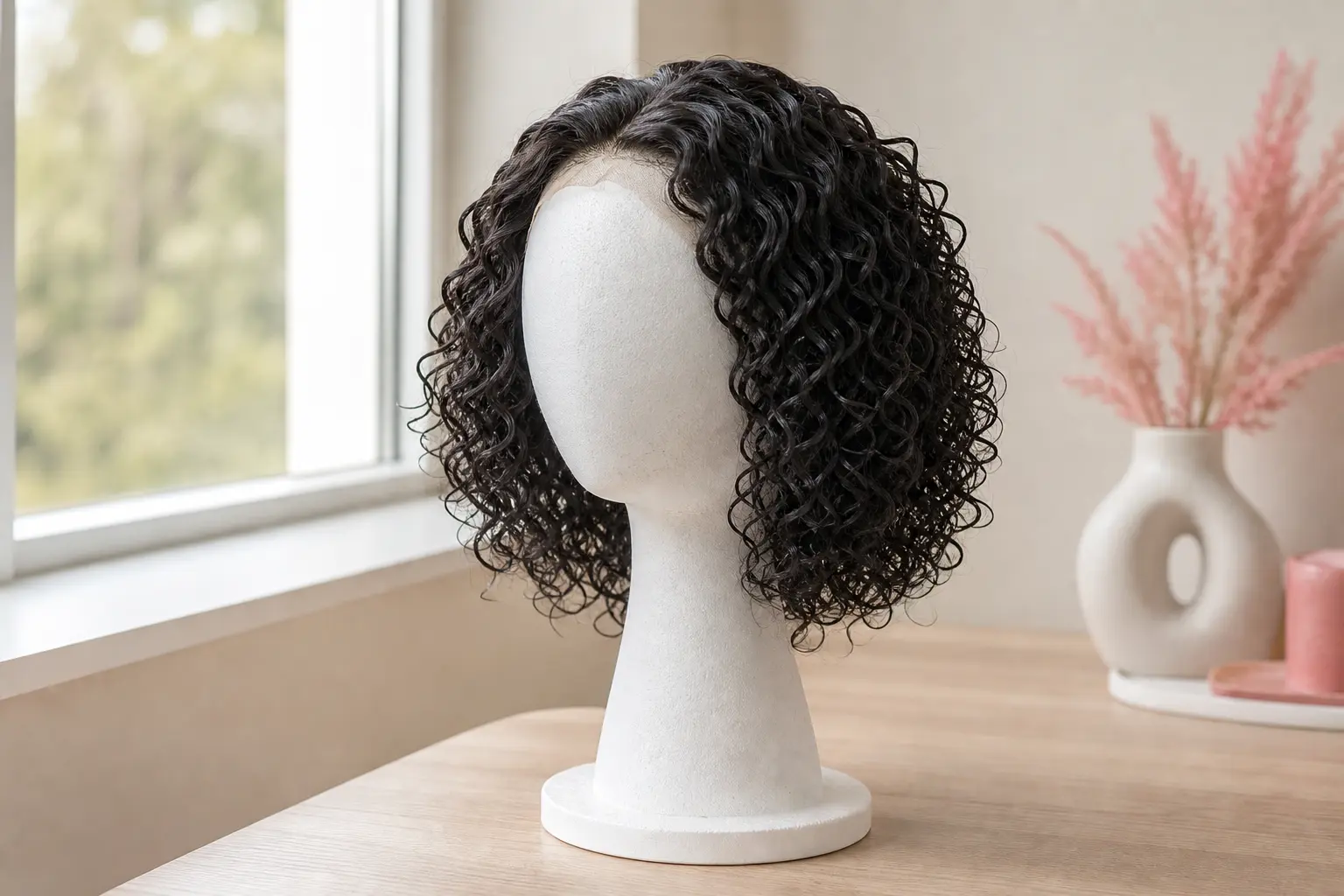
Blot the wig with a towel to remove excess water, then set it on a wig stand or foam head and let it air-dry completely, which usually takes a few hours to overnight. Keep it away from radiators, direct sun, and blow dryers, all of which cook synthetic fiber. A wig stand lets air circulate around the whole cap and holds its shape, so the wig dries evenly without mildew or a flattened crown.
Heat-Styling Heat-Resistant Fiber Safely
Heat styling is only for fiber confirmed as heat-resistant. That fiber is rated to about 350°F, but you should keep any tool at or under 280°F, move it quickly, and never hold it more than 10 seconds on one section. Because heat-resistant fiber tolerates styling heat, you can refresh curls or straighten the wig for months instead of buying a new one, which protects what you already paid for.
Test first. A quality wig is part of what you paid for, so before you touch it with any heat tool, try a hidden section at the back. We learned this the hard way, and that first test section is what saves the rest of the wig. Let each curl cool fully so the new shape sets.
Store the Wig to Protect Its Shape
Store a doll’s wig fully dry on a wig stand or in a breathable satin bag, and never seal it in plastic, which traps moisture and invites mildew. How you store the wig between wears decides how much detangling you face next time. A little care here saves you a full wash later.
Wig Stand vs. Satin Bag (Never Plastic)
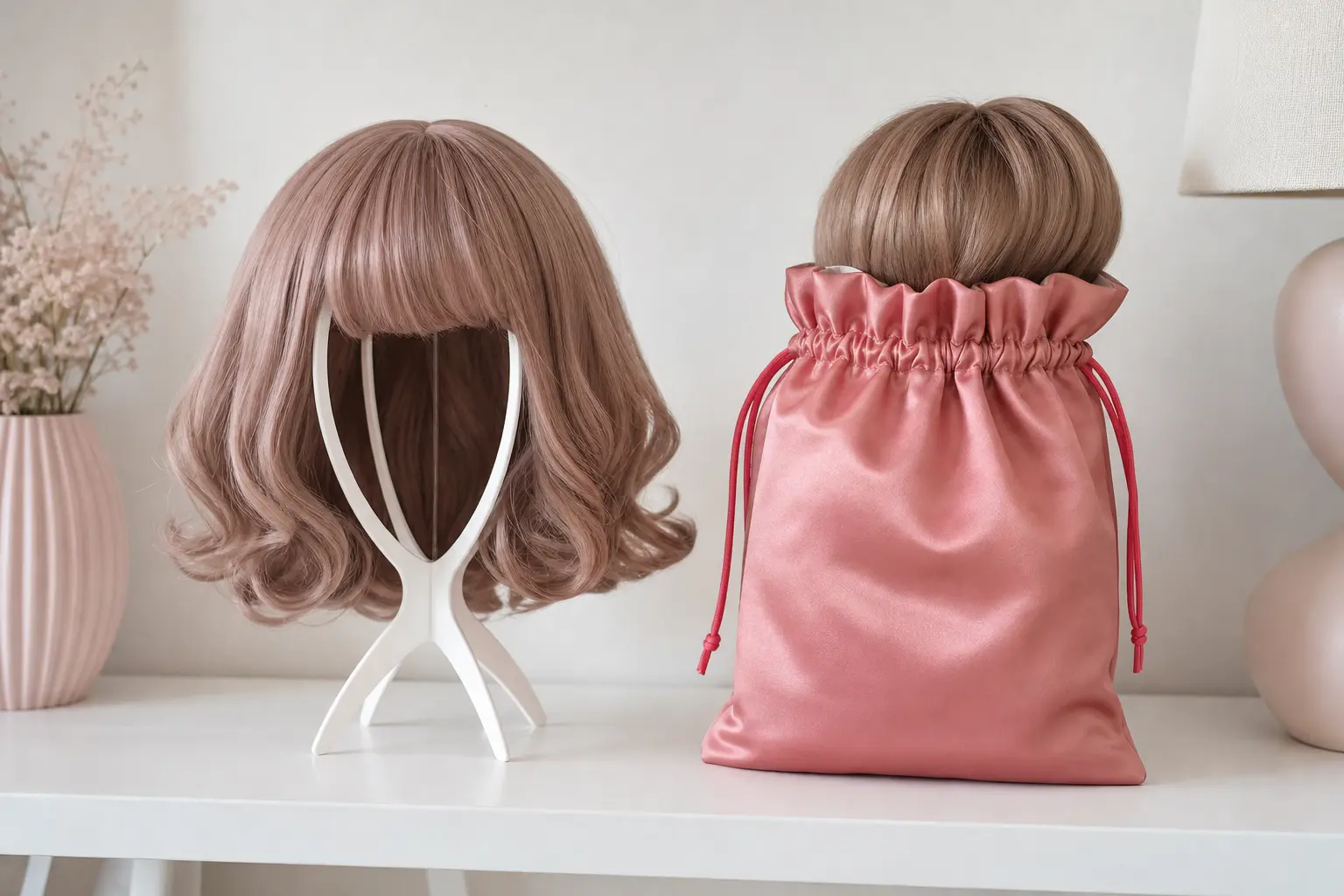
You have two good options. A wig stand keeps the style and cap shape intact and suits a wig you wear often. A satin or silk bag, or a simple hair net, saves space and works well for spare wigs. Skip sealed plastic bags entirely, because a satin bag lets trapped humidity escape and prevents the musty, mildewed smell a plastic bag causes. Keep stored wigs away from heat, sun, and damp.
When your doll is not in use, our guide to fitting and storing your doll’s wig covers keeping the whole doll safe and dust-free.
Common Mistakes to Avoid
- Hot water or a blow dryer on standard synthetic fiber, which melts and warps it.
- Brushing a wet synthetic wig, which causes heavy shedding and frizz.
- Regular human shampoo, which strips and fluffs the fiber.
- Heat tools on non-heat-resistant fiber, which fuses the strands.
- Storing the wig damp or in sealed plastic, which breeds mildew.
- Skipping the dry detangle before washing, which locks in knots.
The mistake we see most often is tucking a slightly damp wig into a plastic bag. It comes out smelling musty and matted, and it needs a full re-wash to recover.
The key takeaway: cool water, dry detangling, air-drying on a stand, and heat only on heat-resistant fiber. Master those four habits and your doll’s wig will stay soft, smooth, and natural-looking for years.
Frequently Asked Questions
Use a wig shampoo or a gentle baby shampoo. Regular human shampoo makes synthetic fiber fluff up, dry out, and tangle faster, because it is formulated for scalps that produce natural oils. Synthetic hair has none.
Only if the fiber is heat-resistant. Standard synthetic melts above 180°F, so use low heat under 280°F, keep the tool moving for no more than 10 seconds per section, and always test a hidden strand first.
Wash it every 6-8 wears, which is about once every two weeks with daily use, and roughly monthly for a display wig. Over-washing dulls the fiber faster, so do not wash more than you need to.
Yes. Dilute about one capful of liquid fabric softener in a basin of cool water, soak the wig for about 10 minutes, then rinse it well and air-dry. For synthetic-safe cleaners and a wig stand, see the doll care accessories linked earlier in this guide.
Keep Your Doll Looking Its Best
A well-kept wig is only part of the picture. Explore SweetieDoll’s doll collection and find the right companion, made to last with the right care.Shop SweetieDoll’s Doll Collection →
References
- Doll Hair Care Basics: Practical detangling and washing techniques for doll hair. American Girl
- Synthetic Wig Care Guide: How to wash, store, and style synthetic wig fibers without damage. Headcovers
- Wig Care Myths, Explained: A wig maker’s guide to what actually protects synthetic fiber. Jon Renau
- Understanding Kanekalon Fiber: Background on modacrylic synthetic hair and its heat limits. Beachwave Perm
These are general care guidelines for doll wigs made from synthetic fiber. Always follow any specific care instructions included with your own wig, since fiber blends can vary. When in doubt, choose the gentler option: cooler water, less heat, and a slower detangle.