
A brand-new lace set can leave a permanent shadow on your doll’s skin in a single afternoon. To dress a sex doll without staining or tearing the skin, powder the body first, choose light-colored and pre-washed fabrics, add a white cotton barrier under anything dark, and dress the doll lying flat so the joints never take a hard pull. That short routine prevents the two problems owners regret most: dye migration (color soaking out of fabric into the skin) and small tears at the seams. Since 2022, SweetieDoll has helped thousands of owners keep soft TPE and silicone dolls looking new, and this guide turns our most common support question into a clear, repeatable process.
Table of Contents
Why Dressing a Sex Doll Is Different (and Riskier) Than Dressing a Person
Dressing a doll carries two risks that human clothing never poses: porous skin that absorbs dye, and molded joints that tear under a hard pull. Human skin shrugs off a new pair of dark jeans, but a doll’s skin does not. Getting the outfit on is easy. Keeping the skin clean and intact is the real skill.
TPE (thermoplastic elastomer) is the soft, skin-like blend of plastic and rubber that most affordable dolls are built from, and its surface is slightly porous. Dark, saturated fabric pressed against that porous surface causes color transfer, the same way a wet red shirt bleeds onto a white one in the wash. Porous TPE absorbs loose dye from dark clothing within a few hours of contact. Heat speeds this up, so a doll dressed in dark fabric in a warm room stains faster than one kept cool.
How TPE and Silicone Absorb Color (Dye Migration Explained)
Dye migration is the movement of loose color molecules from fabric into a softer, more porous surface. TPE has microscopic pores that trap those molecules, which is why the stain sits below the surface instead of wiping off. Platinum silicone is non-porous, so it resists staining far better, though it is not fully immune to strong dye left on for weeks. If you are still choosing a doll, it helps to understand how porous TPE compares with platinum silicone before you buy.
Where Dolls Tear: Joints, Seams, and Friction Points
Tears almost always start at the joints, where the skin stretches thinnest over the internal skeleton. The shoulders, hips, and knees take the most stress when you pull a tight sleeve or waistband. A snug garment snags at a seam and stretches the TPE past its limit, opening a small split that only grows. Dry, un-powdered skin grips fabric and resists every tug, which turns a simple sleeve into a tearing risk.
What Fabrics Are Safe for a TPE or Silicone Doll?
The safest fabrics for a doll are white or light-colored natural fibers such as cotton, linen, silk, and satin, because they carry little loose dye and slide over the skin without friction. Dark synthetics, cheap denim, and red or black lace sit at the opposite end of the scale and cause most staining.
The Fabric Stain-Risk Spectrum (Safe / Moderate / High)
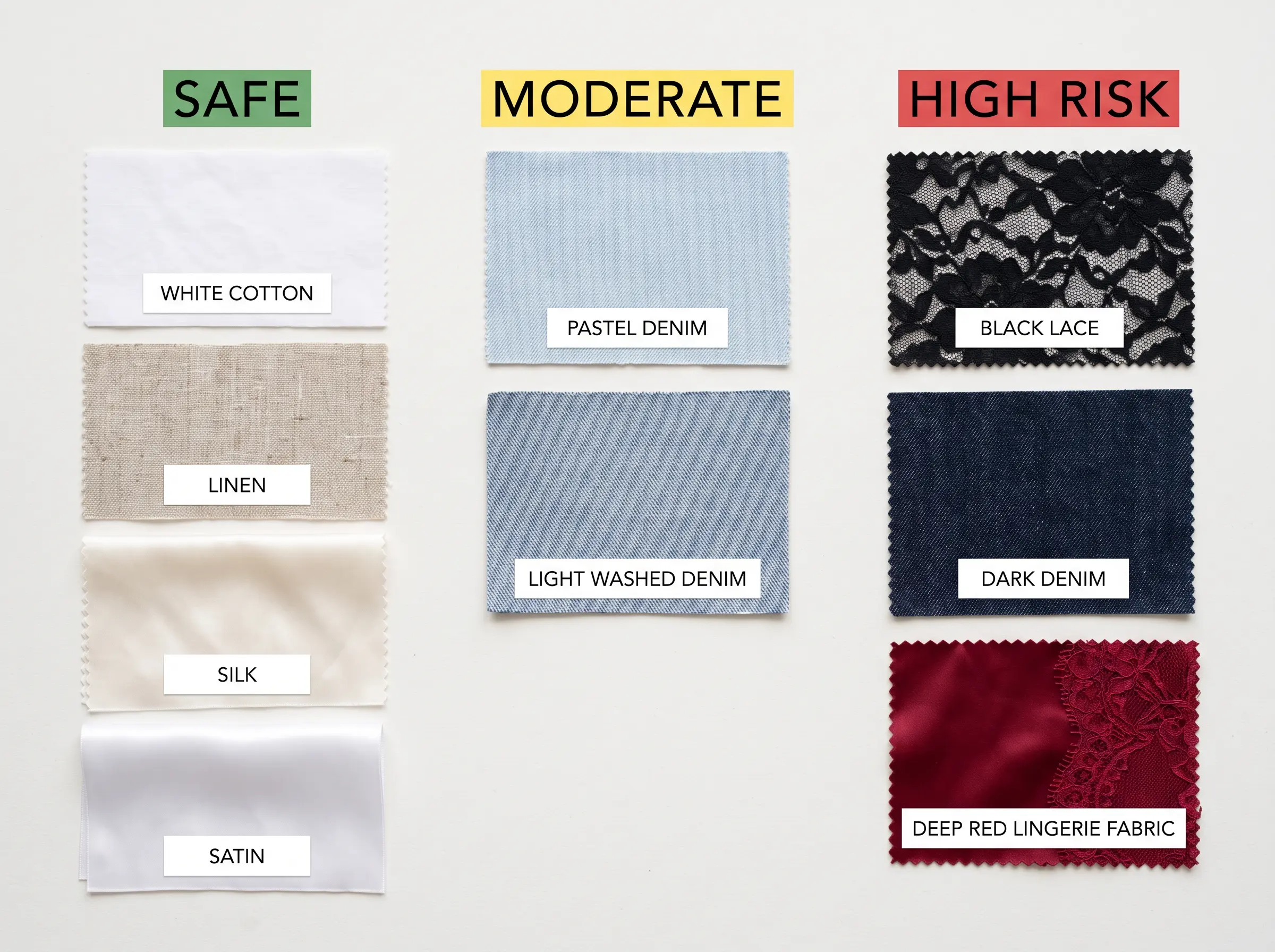
Use this stain-risk spectrum to judge any garment before it touches the skin:
| Risk level | Typical fabrics | What to do |
|---|---|---|
| Safe | White or light cotton, linen, silk, satin | Wear freely, still pre-wash once |
| Moderate | Pastels, washed light denim, synthetic blends | Pre-wash well, add a barrier layer |
| High | Black, navy, and dark red synthetics, dark denim, black lace, red lingerie, dyed leather or PVC | Keep off bare skin, always use a barrier |
Choosing from the safe column keeps your doll’s skin its original color for years. That protects both the look and the long-term value of a doll that can cost $500 or more, so a two-minute fabric check pays for itself many times over.
Do Silicone Dolls Stain Like TPE Dolls?
Silicone dolls stain far less than TPE dolls, because platinum silicone is non-porous and does not absorb dye the way porous TPE does. No material is completely stain-proof, though. Strong dye left against silicone for weeks can still leave a faint mark, so the same light-color and barrier habits apply, just with more room for error.
How to Prevent Staining: Pre-Wash, Powder, and Barrier Layers
Prevent staining in three layers: pre-wash new clothes until the water runs clear, dust the doll with renewal powder, then slip a white cotton barrier under anything dark. No dark, unwashed fabric should ever touch the skin directly.
- Pre-wash every new garment until the rinse water runs clear, often 3 to 10 cycles.
- Powder the skin with a thin, even coat of renewal powder to cut friction and block absorption.
- Add a barrier layer, such as a seamless white cotton bodysuit, under any high-risk clothing.
Pre-Washing New Clothes Until the Water Runs Clear
Pre-washing is the single most effective way to strip the loose dye that causes staining. Repeated pre-washing removes the surface dye that would otherwise migrate straight into the skin. Wash safe-color items about 3 times, moderate items 5 or more, and high-risk dark or red items 8 to 10 times, or skip them on bare skin entirely. Dropping a color-catching sheet into the load pulls even more dye out of the fabric before it ever reaches your doll.
The 24-Hour Spot Test (Exact Protocol)
When you are unsure about a fabric, run a spot test before full contact. Fold a 2-inch (5 cm) patch of the garment, dampen it with warm water, press it against a hidden area such as the sole of the foot, cover it with plastic wrap, and leave it for 24 hours. If the skin shows any tint after you lift the patch, keep that fabric off bare skin. We use warm water rather than a dry check for this test, because warmth and moisture mimic real wear and reveal dye that a dry patch misses.
Powdering and Barrier Layers That Stop Dye Transfer
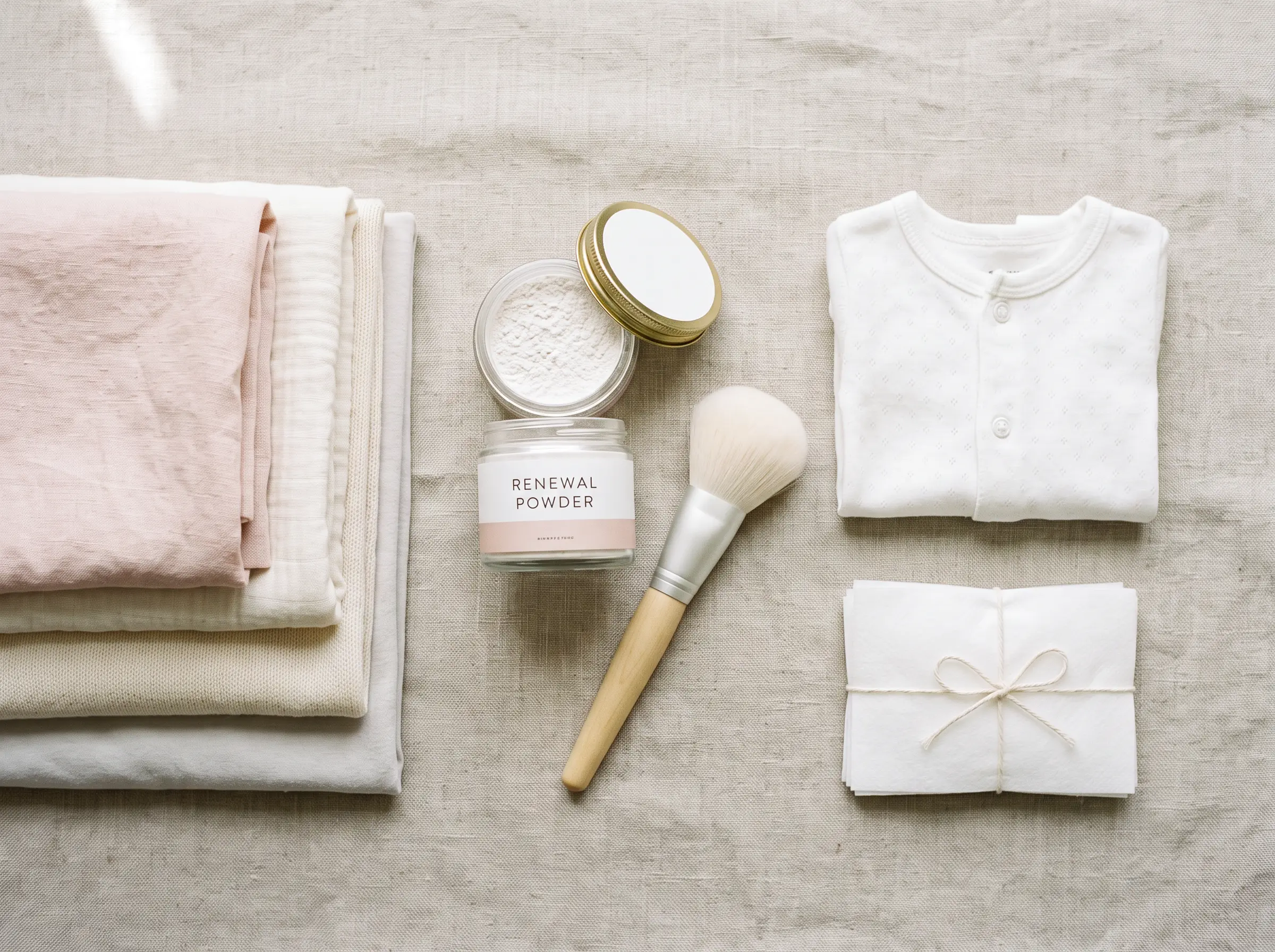
A light coat of renewal powder, a fine talc-free powder made for doll skin, reduces friction so clothes glide on instead of dragging. Less friction means less pulling at the seams and less dye pressed into the pores. For anything dark, a white cotton barrier layer is your insurance, since it absorbs any residual dye itself and stops the color reaching the skin.
Stock the basics once. You can find renewal powder and doll care kits in our Accessories & Care range, which keeps powder, cleaner, and storage in one place so prep never gets skipped.
How to Put Clothes On Without Tearing the Skin (Step by Step)
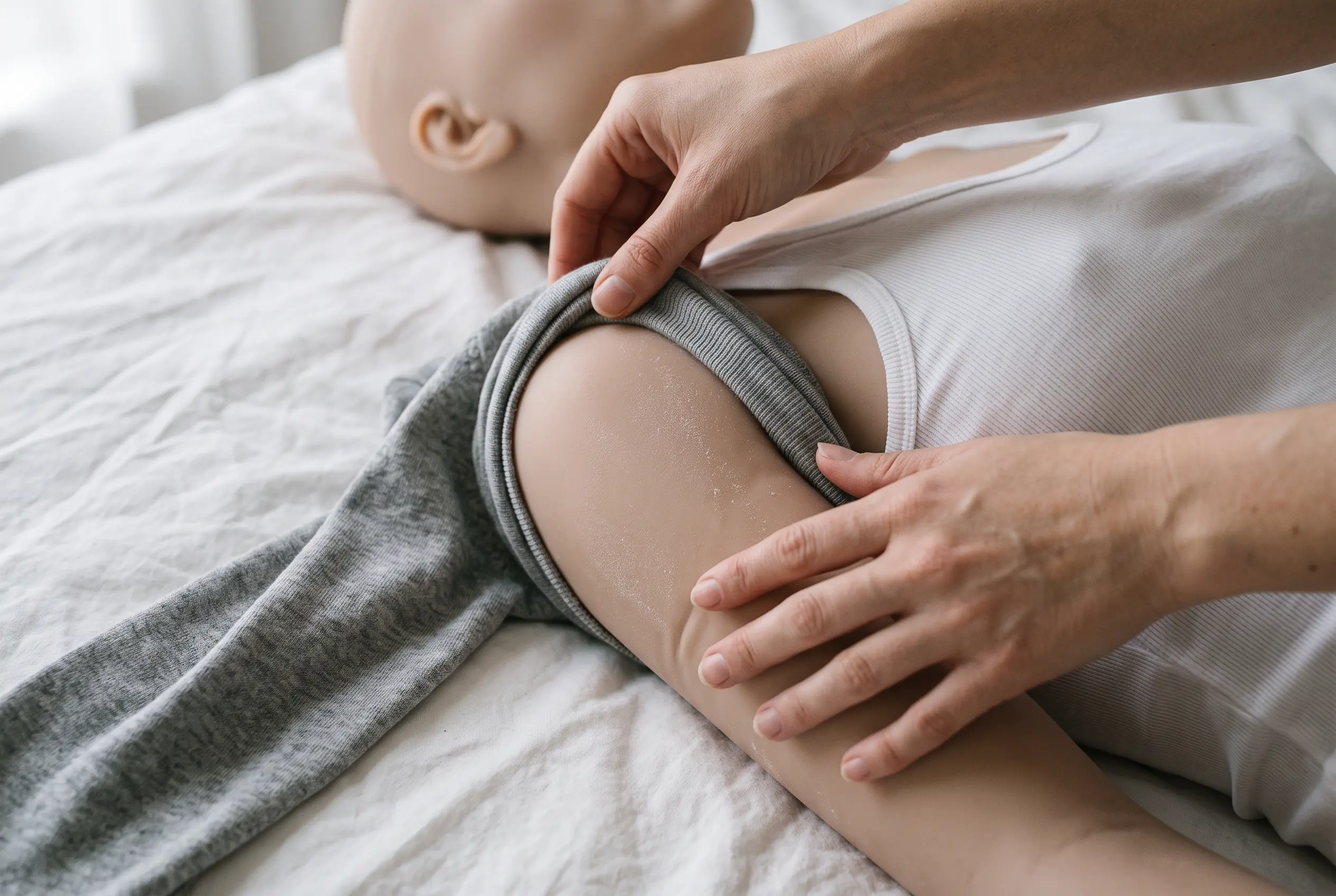
To dress a doll without tearing the skin, powder the body first, lay the doll flat, pull lower-body garments up from the feet, and slide tops on from above with the arms gently lifted.
- Powder first so a light, dry coat cuts friction at every contact point.
- Lay the doll flat on a firm surface that takes the weight off the joints.
- Dress from the feet up, guiding pants and skirts over the toes and up the legs.
- Lift the arms gently and feed sleeves on from above without forcing the shoulder.
- Loosen, do not yank, opening every zipper, button, and lace fully before you pull.
Powder First, Then Dress Lying Flat
Powdering and a flat surface do most of the tear-prevention work. A flat surface supports the doll’s frame so the joints absorb no pulling force during dressing. Dry skin grips fabric and forces you to tug, and every tug loads stress onto the shoulders, hips, and knees. The first few times, go slow around the shoulders. The most common beginner mistake we see is forcing a fitted sleeve over a bent elbow, which is exactly where the skin tends to split.
Choosing Lace-Up, Stretchy, and Adjustable Garments
Stretchy and adjustable clothing protects the skin because it moves with the body instead of fighting it. Look for spandex blends, jersey knits, lace-up backs, wrap styles, and elastic waistbands. These forgiving cuts let you dress the doll in half the time with none of the pulling, so both the skin and your patience last longer. Skip stiff, boned corsets and narrow rigid sleeves, which concentrate force on a single seam.
What Size Clothes Fit a Sex Doll?
Most full-size dolls fit US women’s size 00 to XS, with a slim waist around 22 inches (56 cm), so juniors and small adult sizes usually work best. Measure the chest, waist, and hips with a soft tape before you shop, since sizing varies by brand. Fuller-figured bodies need roomier, stretchier fabric to move without strain. For those builds, curvy sex dolls with fuller busts and hips pair best with stretch fabrics that follow the curves instead of pulling against them.
Suggested original visual: a labeled “dress from the feet up, arms lifted” step diagram, plus the fabric stain-risk spectrum as an infographic (add descriptive alt text on upload).Add one original step diagram or short clip here to match the visual results Google shows for this query.
Seasonal Dressing, Storage, and How Long to Leave Clothes On
Do not leave one outfit on for months. Rotate clothing every 2 to 3 weeks, and give the skin at least 48 hours uncovered between changes so any surface dye fades and pressure marks recover.
Rotate Outfits and Let the Skin Breathe
Rotation protects the skin from both staining and permanent creasing. Fabric left in constant contact keeps pressing dye inward, and a tight seam can leave a lasting pressure indentation in the soft TPE. TPE holds a memory of long pressure, so a waistband worn for months can leave a groove that takes weeks to relax. A rest period of 48 hours uncovered lets the material settle back to a smooth surface.
Summer Heat, Storage, and Holiday Photo Looks
Heat and long storage are when staining quietly happens. Warmth speeds dye migration, so strip dark outfits before a hot day or a warm closet, and store the doll in a breathable cover rather than sealed plastic. Dressing up for a holiday such as the 4th of July, Halloween, or Thanksgiving is part of the fun. After the photos, take the outfit off, wipe the skin down, and let it breathe. For the full cleaning routine between outfits, see SweetieDoll’s sex doll cleaning and care guide.
What to Do If Your Doll Is Already Stained
For a fresh, shallow stain, coat the spot with a 10% benzoyl peroxide cream, cover it with plastic wrap, and leave it under bright light for 24 to 48 hours before wiping it away. Deep dye that has already migrated below the surface, however, is usually permanent.
Before you treat a stain: This guide is for general educational use, not medical or safety advice. Benzoyl peroxide is a mild bleach, so test any method on a hidden area first, work in a ventilated space, keep products away from the face, eyes, and body openings, and let an adult handle the process. Results vary by material, and no method is guaranteed.
The Benzoyl Peroxide Method (with Safety Cautions)
Benzoyl peroxide, the active ingredient in many acne creams, slowly bleaches surface dye out of doll skin. Apply a 10% cream over the stain, cover it with cling film to hold in moisture, and place the area in sunlight or under a lamp for 24 to 48 hours. Repeat once or twice if the mark fades but does not fully clear. Because it lightens color, benzoyl peroxide can also fade darker skin tones, so keep it on the stain and off clean skin.
The Mineral-Oil Method and When a Stain Is Permanent
For lighter marks, a gentler option is mineral oil. Soak a paper towel in mineral oil, lay it over the stain, wrap it in cling film, and replace it every 24 hours until the color lifts. Be realistic about deep stains, though. Once dark dye has soaked into porous TPE, no method reliably removes all of it, which is why prevention beats removal every time. Never scrub hard, since scrubbing only works the dye deeper into the pores. If easy cleaning and stain resistance matter most to you, a non-porous silicone model is worth the upgrade the next time around.
Frequently Asked Questions
Yes, most human clothing works, but screen it first. Pre-wash new items until the water runs clear, favor light colors, and keep dark denim or black lace off bare skin with a white cotton barrier layer.
Yes. Dark, saturated synthetics and cheap denim are the most common cause of permanent staining, because porous TPE absorbs their loose dye. Pre-wash them heavily, run a spot test, and always add a barrier layer underneath.
Rotate outfits every 2 to 3 weeks, and leave the skin uncovered for at least 48 hours between changes. Months in a single outfit invite both dye migration and permanent pressure marks.
Sometimes. A fresh, shallow stain often fades with a 10% benzoyl peroxide cream under light over 24 to 48 hours. Deep dye below the surface is usually permanent, so prevention beats removal.
Dress with confidence, protect your investment
Browse SweetieDoll’s full sex doll collection by material, feel, and price, backed by discreet shipping and clear warranties.Shop Sex Dolls →
📚 References
- Dye Transfer and Colorfastness to Storage: Test standard describing how dye migrates between touching fabrics and surfaces during storage and contact. AATCC (American Association of Textile Chemists and Colorists), TM163
- Why Porous TPE Absorbs Color: Materials overview comparing porous TPE with non-porous silicone, including care needs and staining behavior. LoveSparklers Materials Guide
- Non-Porous Silicone Explained: Engineering overview of why medical-grade silicone is non-porous and chemically inert, so it resists stains. Apple Rubber
- Removing Set-In Dye Stains (Benzoyl Peroxide Method): Community-tested method for lifting dye and ink stains from porous doll material using benzoyl peroxide. American Girl Wiki