
A sex doll can look flawless in a product photo and still freeze into stiff, unnatural poses once it arrives. The difference almost always comes down to one part you never see: the sex doll skeleton, the internal metal frame under the skin. Get the skeleton right, and the doll holds natural, lifelike positions. Get it wrong, or push it past its limits, and poses either look wooden or put the doll at risk of damage.
Table of Contents
Here is the short answer. A doll is poseable because of three things working together: the internal metal skeleton, the type of joints built into it, and the skin material wrapped around it. The skeleton and joints decide how the body moves. The TPE or silicone skin decides how far that movement can flex without stress.
At SweetieDoll, we have sold dolls since 2022 and work with more than 40 brand manufacturers, so we see the same skeleton questions from buyers again and again. This guide covers what a doll skeleton is, the main skeleton types (standard, articulated, and EVO), how far the joints safely move, and how material shapes poseability. No engineering lecture, just what actually changes how your doll looks and how long it lasts.
🦴 What Is a Sex Doll Skeleton?
A sex doll skeleton is the internal metal frame, usually made of stainless steel, that gives a soft TPE or silicone body its shape, support, and ability to hold a pose. Without it, the doll would be a shapeless shell of skin material with nothing to position or support.
The skeleton runs through the torso, limbs, neck, and often the hands, much like the bones in a human body. Manufacturers pour or cast the skin material directly around this frame, so the metal stays sealed inside and never touches you during use. A well-built frame also carries the doll’s full weight, which for a full-size model runs about 55 to 110 lb (25 to 50 kg).
What materials are sex doll skeletons made of?
Most skeletons use a stainless-steel frame with steel or alloy joints, chosen for strength and rust resistance. Some premium builds add lighter aluminum sections to cut weight. The category’s original poseable doll, the RealDoll from Abyss Creations, uses a poseable PVC skeleton with steel joints under silicone flesh, a design that set the template the whole industry still follows.
Why does a doll need an internal metal skeleton?
A doll needs a metal skeleton for the same reason your body needs bones: structure and movement. The frame holds the shape, carries the weight, and gives the joints something rigid to pivot against. Skin material on its own, whether TPE or silicone, is far too soft to stand, sit, or hold a raised arm.
🤸 What Makes a Sex Doll Poseable?
A sex doll is poseable because its internal metal skeleton has movable joints that lock into position, while the soft skin flexes and compresses around that frame. Poseability is the result of the skeleton and the skin material working together, not either one alone.
The skeleton sets what is mechanically possible. Each joint, at the shoulders, elbows, hips, knees, wrists, and neck, moves within a set range and then holds where you leave it. Proper skeleton design is what gives a doll its poseability, letting it sit, kneel, or raise an arm and stay there for a photo. The skin material then sets the limit, since TPE and silicone can only stretch and fold so far before they stress the frame at high-motion points like the hips and shoulders.
How do joints let a doll hold a position?
Joints hold a position through friction or a lock. Most doll joints are friction-based, meaning they stay put because the parts fit tightly enough to resist gravity. Higher-end skeletons add locking joints at key points such as the knees, so the doll can hold demanding poses without slowly sagging.
Do all sex dolls bend the same way?
No. How a doll bends depends on its skeleton grade. A basic frame allows simple front-to-back bends, while a fully articulated or EVO frame adds shrugging shoulders, a flexible spine, and knees that fold flat. You can browse SweetieDoll’s full collection of poseable, articulated dolls to compare how different builds actually move.
⚙️ Skeleton Types: Standard, Articulated, and EVO
Sex doll skeletons come in three tiers, standard, fully articulated, and EVO, and the tier decides how many lifelike poses a doll can actually hold. Higher tiers add joints and flexibility, which widens your posing range but raises the price.
| Skeleton type | What it adds | Best for |
|---|---|---|
| Standard | Basic jointed frame, simple front-to-back and side bends | Budget buyers, static display |
| Fully articulated | Movable shoulders, elbows, hips, knees, wrists, and ankles | Most buyers who want varied, natural poses |
| EVO | Shrugging shoulders, 5 to 8 segment flexible spine, fold-flat lockable knees | Photography, upright storage, demanding poses |
What is an EVO skeleton?
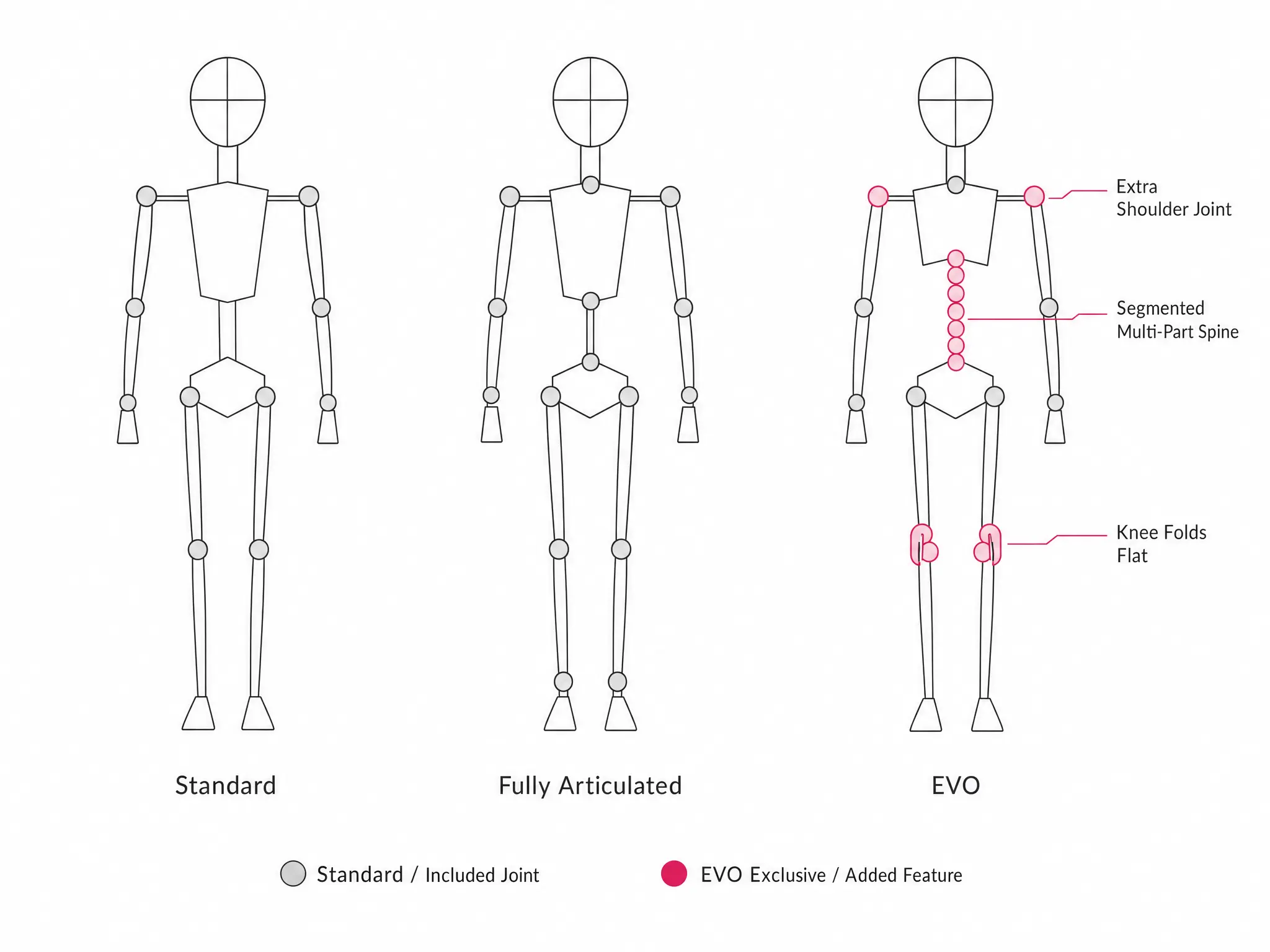
An EVO skeleton is an upgraded, evolutionary doll frame with extra joints and a segmented, flexible spine that allows poses a standard skeleton cannot reach. Its signature features are a multi-segment spine, typically 5 to 8 segments depending on the brand, and knees that fold flat and lock in place. Brands such as Doll Forever and Piper Doll are known for EVO builds, and the upgrade usually adds about $180 to $450 depending on the model, according to sellers.
The payoff is practical. Those extra joints let the doll shrug, arch, and kneel in ways a basic frame cannot, which means more natural photos, easier upright storage, and a body that flexes without straining the same joints over and over. If your budget is above about $2,000 and you care about posing, the EVO upgrade usually earns its cost.
What are shrugging shoulders?
Shrugging shoulders are an extra joint added near each shoulder that lets the doll raise, drop, and roll its shoulders for more natural upper-body poses. On an EVO skeleton, shrugging shoulders let the arms sit closer to the body and reach across the chest, which fixes the stiff, T-shaped arm position common on basic frames.
Standard vs EVO: which should you choose?
Choose a standard skeleton for a lower price and simple posing, or an EVO skeleton for the widest posing range and easier storage. In our experience, buyers who mainly want a doll for display are happy with a standard or fully articulated frame, while those who plan to photograph their doll or store it standing get the most from EVO. You can customize your doll’s skeleton and standing-feet options directly when you order.
📐 Joint Types and How Far They Safely Bend
Most sex dolls use three joint types, ball-and-socket, hinge, and friction, and each has a built-in range of motion you should stay within to avoid damage. Knowing these limits is the single best way to pose your doll safely.
Ball, hinge, and friction joints explained
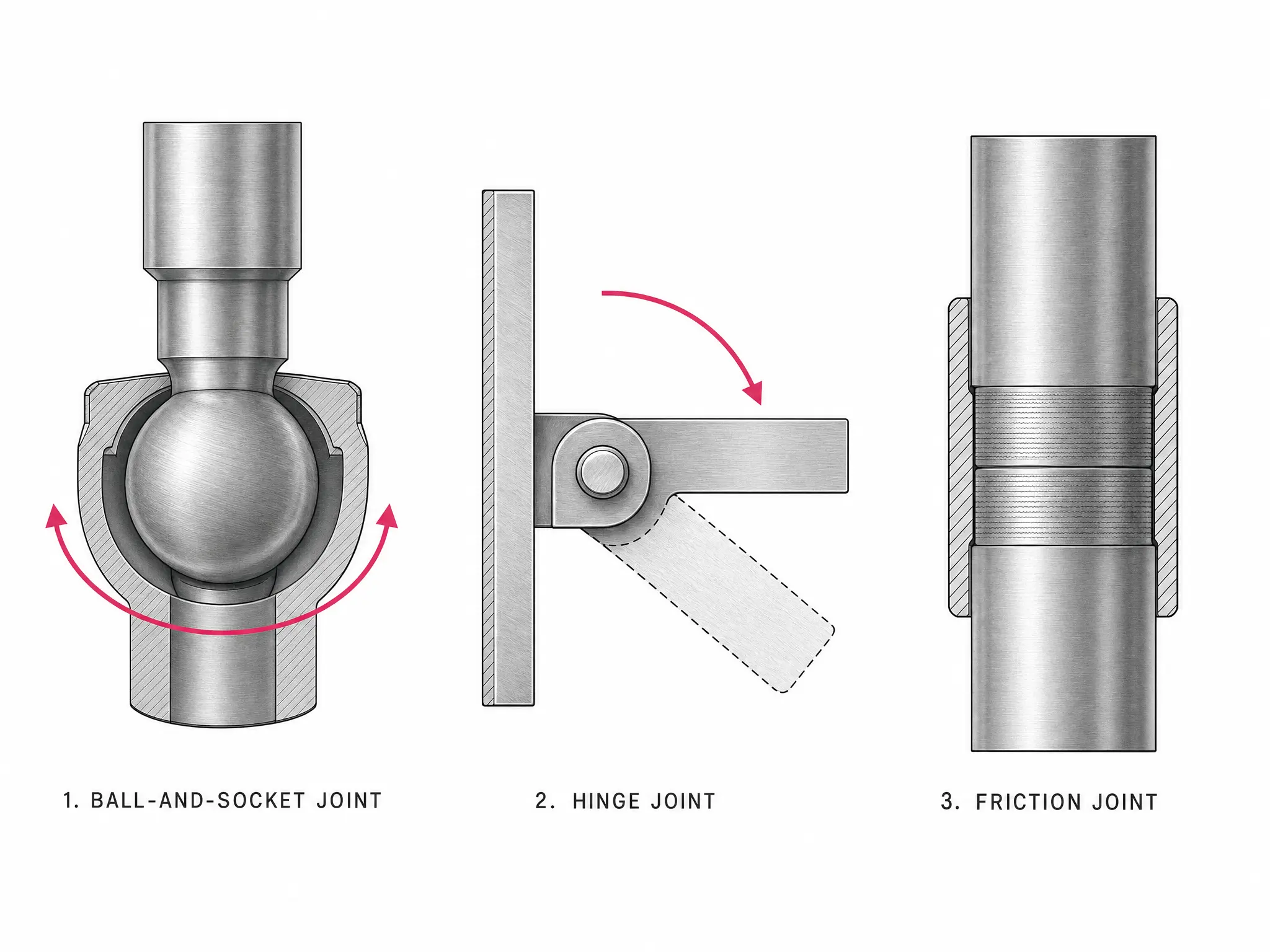
Ball-and-socket joints handle rotation at the shoulders, hips, and wrists, allowing circular movement. Hinge joints work like a door at the elbows and knees, bending in one direction. Friction joints hold the set position through tension. A common mistake we see is treating a hinge joint like a ball joint and twisting a knee sideways, which is one of the fastest ways to bend or break a frame.
How far can a doll’s joints safely bend?
A doll’s joints each have a safe range, and pushing past it risks bending the skeleton or tearing the skin. Published guidance from DS Doll gives a useful reference for typical limits.
| Joint | Typical safe range |
|---|---|
| Head (turn, nod, side tilt) | Up to 45° |
| Upper arm (forward lift) | About 60° |
| Lower arm (elbow bend) | 90°, one direction |
| Ankle | 45° both ways |
| Thigh (spread) | 130° maximum, about 50° for everyday posing |
| Eyes (where adjustable) | Up to 120° |
⚠️ Pose with care: Never force a joint past the point where it resists. Knees especially should not bend backward (hyperextension), because that is unnatural, makes standing difficult, and can snap the frame. When in doubt, move slowly and stop at the first firm resistance.
🦶 Standing Feet, Hands, and Other Poseable Parts
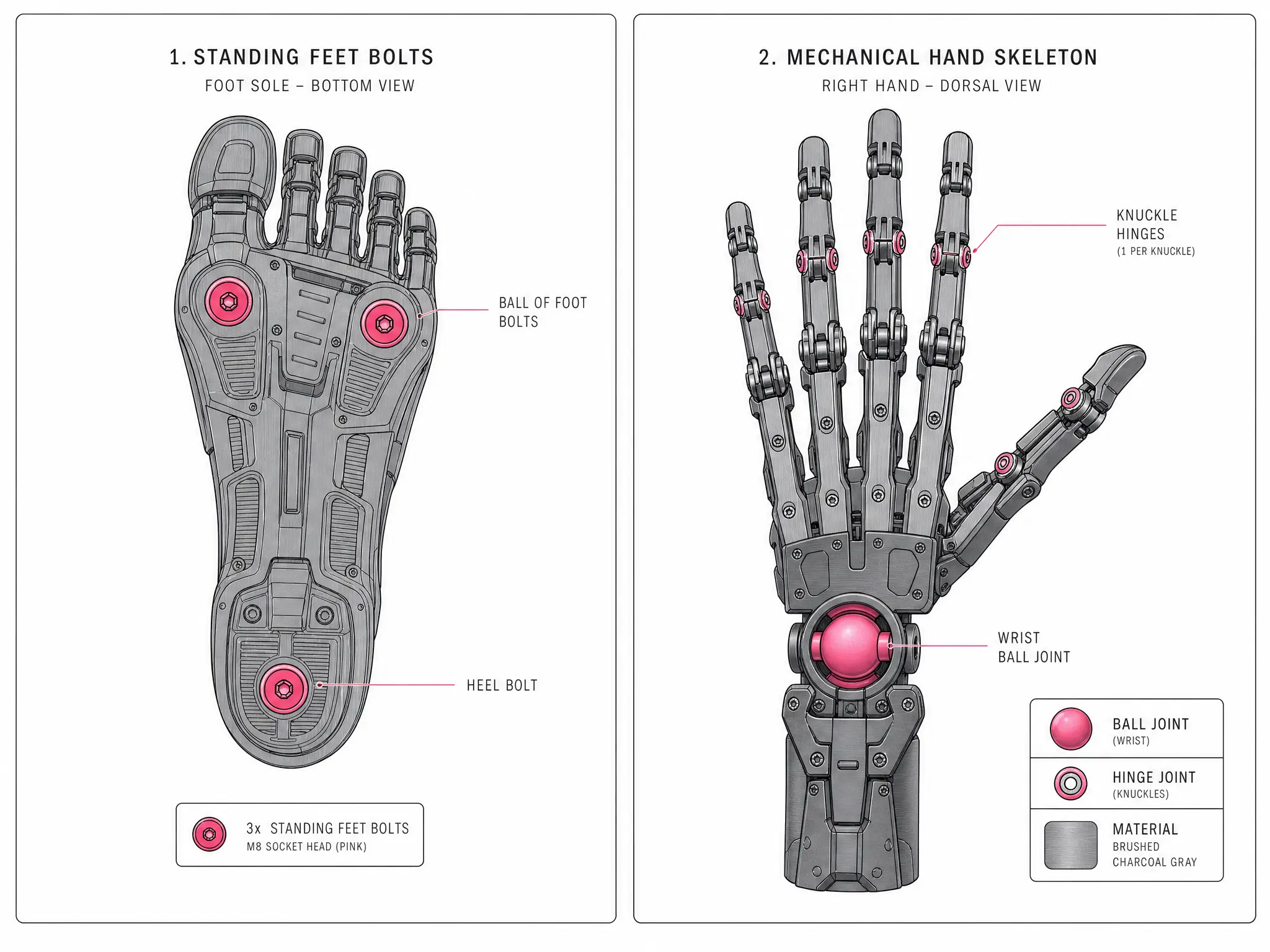
Standing feet and articulated hands are add-ons that extend a doll’s poseability to its extremities, letting it stand upright and position its fingers naturally. These smaller features often matter more to buyers than they expect.
What are standing feet, and do you need them?
Standing feet are foot bolts, usually three small metal studs added to each sole, that let a doll stand and store upright without deforming the feet. Standing feet rely on those foot bolts to spread the doll’s weight across a stable base, so the soft soles keep their shape longer. TPE dolls generally come with bolted feet only, while silicone dolls can use bolted feet or a firmer boltless sole. You need standing feet if you plan to photograph your doll upright or store it standing, though even then it should lean against a wall or support, since all its weight rests on a small area.
Do sex dolls have articulated fingers or hand skeletons?
Many modern dolls now use a full hand skeleton, with ball-jointed wrists and malleable finger joints, replacing the fragile wire fingers of older models. WM Doll and Irontech were among the first to release hand skeletons, back in 2021. Older wire fingers bent easily and often poked through the skin over time. A proper hand skeleton lets fingers hold small props and pose naturally while lowering the risk of a wire tearing through. For builds with upgraded hands, WM Doll’s articulated models are a good place to start.
🧬 How Material and Care Affect Poseability
A doll’s skin material affects how far it can flex, and good care keeps both the skin and the skeleton working for years. Material sets the flexibility ceiling, and maintenance protects the frame that does the posing.
Are TPE or silicone dolls more poseable?
TPE is generally more flexible for extreme poses, stretching about 6 to 8 times its original length, versus roughly 3 to 5 times for silicone. That extra stretch means a TPE body folds into demanding positions more easily, while silicone holds finer surface detail but resists deep stretching. Silicone is also firmer and heavier at the same size, which affects how easily you can move and pose it. For a full breakdown of how TPE and silicone compare on feel, stretch, and durability, see our dedicated guide. Hybrid dolls, which pair a silicone head with a TPE body, are a popular middle path.
How long does a sex doll skeleton last?
A well-maintained skeleton lasts as long as the doll itself, roughly 3 to 5 years for a TPE body and 5 to 10 or more years for silicone. The frame rarely fails first. What wears is the joints: friction joints can loosen with heavy use, causing a slight click or trouble holding a pose. When that happens, many brands sell replacement skeleton parts, so a loose joint rarely ends a doll’s life. To protect both the skeleton and the skin, avoid forcing joints, store the doll in a relaxed position, and keep up with basic upkeep using skeleton-safe care and storage supplies.
The bottom line: a sex doll skeleton is what turns a soft shell into a poseable companion, and the frame, joints, and skin material together decide how it moves and how long it lasts. Match the skeleton tier to how you will actually use your doll, respect each joint’s range, and keep up with simple care. If you are still weighing your options, our complete first-time buyer’s guide to size, material, and build walks through the rest of the decision.
Ready to find a doll that poses the way you want?
Browse SweetieDoll’s full collection of poseable, articulated dolls and compare skeleton and standing-feet options to match how you will actually use yours.Shop poseable dolls
❓ Frequently Asked Questions
Most dolls need standing feet to stand, and even then they should lean against a wall or support, because all the weight rests on a small foot area. Heavier dolls should not stand unsupported for long periods, since that stresses the ankle joints and soles.
Yes. Forcing a joint past its natural range, especially hyperextending a knee or finger, can bend or snap the frame or tear the skin. Stay within each joint’s built-in range and stop at firm resistance.
Friction joints can loosen with heavy use, causing a slight click or trouble holding a pose. Many makers sell replacement skeleton parts, so a loose joint rarely ends a doll’s life.
If your budget is above about $2,000 and you want natural photos, upright storage, and the widest posing range, the roughly $180 to $450 EVO upgrade is usually worth it. Compare builds in SweetieDoll’s full collection to decide what fits your use.
📚 References
- RealDoll skeleton construction: Description of the original poseable PVC skeleton with steel joints under silicone flesh. Wikipedia
- Doll joint movement ranges: Manufacturer guidance on how far each joint should safely move and rotate. DS Doll
- Thermoplastic elastomer (TPE) properties: Technical definition of TPE and its rubber-like elasticity. British Plastics Federation
- TPE structure and processing: Overview of how thermoplastic elastomers are molded and their heat behavior. Encyclopedia Britannica