
A brand-new doll almost always feels cold and lifeless the first time you unbox it, and that chill can break the mood in seconds. The good news is that warming a sex doll safely is easy once you understand the material. This guide compares 3 safe warming methods — a USB heating rod, a warm-water bath, and an electric blanket or built-in heater — so you can pick the right one for your situation. At SweetieDoll, we believe good care is part of good pleasure, so every tip below protects both your comfort and your doll’s lifespan. Follow the numbers and you will bring your doll to body temperature without melting the skin or burning yourself.
Table of Contents
The golden rule of safe sex-doll warming is simple: low and slow beats fast and hot, every single time.
Why does a sex doll feel cold, and why can’t you just heat it fast?
Your doll feels cold because its skin is a poor heat conductor that simply sits at whatever temperature the room is. Most dolls are made from TPE (thermoplastic elastomer), a soft, skin-like rubber-plastic blend, or from silicone, a firmer, more heat-tolerant material. Both warm up slowly, but both also hold heat for hours once warm.
Here is the catch. TPE has poor heat conductivity, so heat travels through it very gradually. Push heat in too fast and the surface deforms before the inside ever warms. TPE begins to lose integrity above 120°F (48°C), and water above 40°C can soften or melt the surface. Silicone tolerates slightly higher heat and holds warmth a little longer than TPE.
Because the material conducts heat so slowly, aggressive heat only damages the outer layer. The key takeaway is to warm gently and give the material time. That is the “low and slow” principle, and every safe method below is built on it.
What is the safe temperature to warm a sex doll?
Aim for human body temperature, about 37°C (98.6°F) — that is the sweet spot for realistic, safe warmth. It is worth noting that the classic 98.6°F figure is now considered a little high: a September 5, 2023 study in JAMA Internal Medicine, based on more than 618,000 Stanford Health Care readings, found the average adult oral temperature is closer to 97.9°F, with a normal range of 97.3–98.2°F. As senior author Dr. Julie Parsonnet put it, “what’s normal depends on the person and the situation, and it’s rarely as high as 98.6 F.” For a doll, anywhere in that gentle band feels lifelike.
To protect the material, keep any water or heat source below 104°F (40°C) as your conservative working limit for TPE. Treat 44°C (112°F) as the absolute ceiling, and remember that damage risk climbs sharply above 48°C (120°F) — the same range that starts to threaten your own skin. According to the U.S. Consumer Product Safety Commission, “even if the temperature is 120 degrees, a five minute exposure could result in third-degree burns,” which is exactly why you never want warming water anywhere near that mark.
Your hand is a terrible thermometer, so do not guess. Use an inexpensive kitchen thermometer to check water or surface temperature before every session. A few seconds of measuring saves you from an expensive, irreversible mistake.
To put it simply, target 37°C, stay under 40°C, and never cross 44°C. Silicone gives you a little more headroom, but the same conservative numbers keep every doll safe.
How do you use a heating rod to warm a sex doll’s cavity?
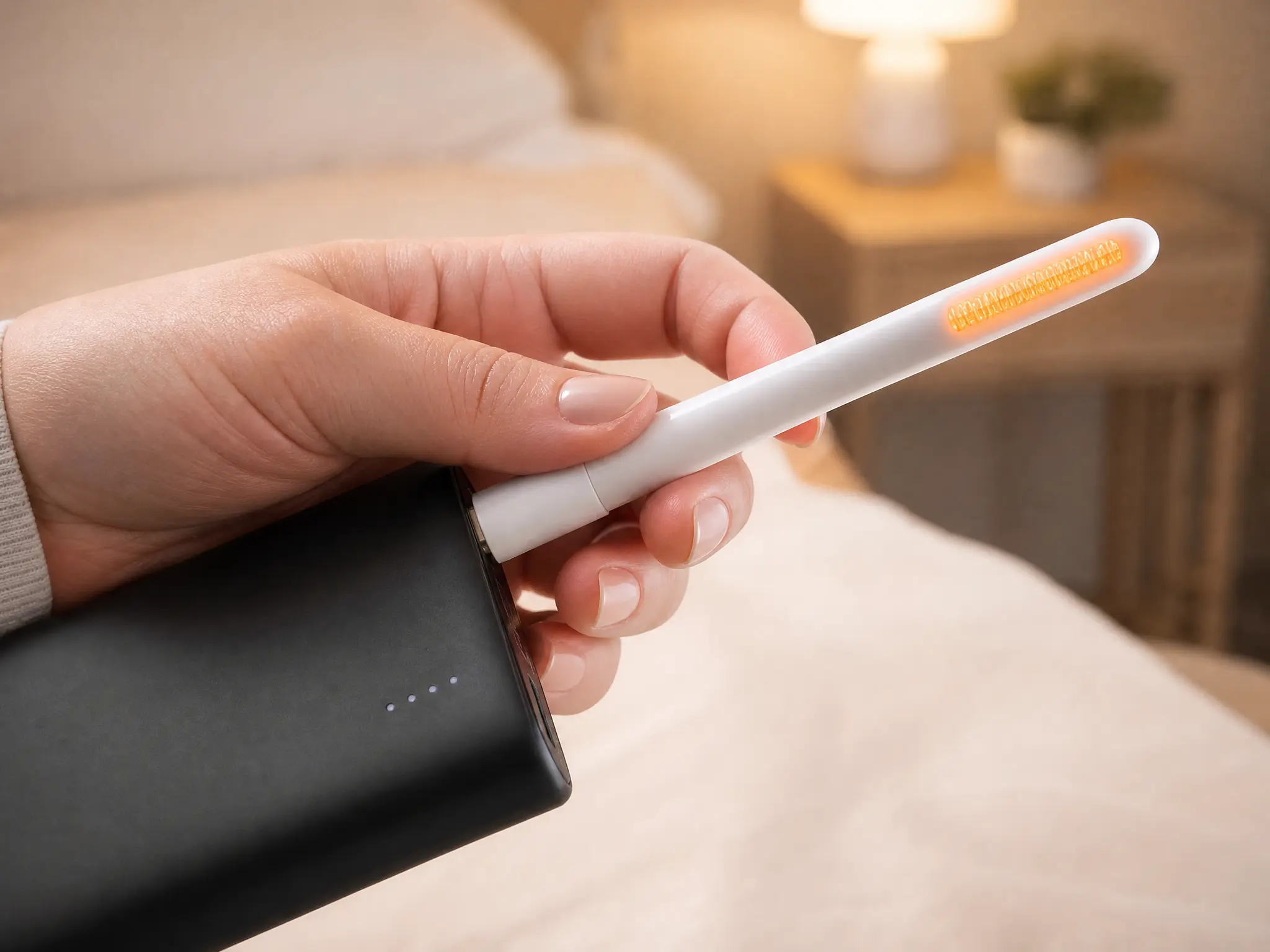
Insert an auto-temperature-control USB heating rod, wait about 7 to 10 minutes, and the cavity warms through safely. A good rod maintains around 110°F (43°C) and resumes heating whenever the temperature drops below 100°F (37°C), so it never overheats. It warms to roughly 43°C in about 3 minutes and takes about 10 minutes to warm the cavity through.
Quality matters here. A basic rod without a sensor reaches only 39.5°C (103.1°F) in about 7 minutes and can keep climbing with no cutoff. Always choose an auto-shutoff rod with a built-in temperature sensor over a cheap basic one. Most rods run on a standard 5V/2A USB supply, so a phone charger or power bank works fine.
Here is the simple, safe routine:
- Plug the rod into a 5V/2A USB adapter or power bank.
- Apply a little water-based lubricant to the rod (never silicone-based, which bonds to the skin).
- Gently insert it into one cavity — it heats one cavity at a time.
- Leave it for 7 to 10 minutes, and never longer than 15 minutes.
- Unplug, let it cool, then clean and air-dry it.
Bottom line: a heating rod is the fastest, most targeted way to warm the cavity before use. It is precise, cheap to run, and — with auto-shutoff — very safe.
Can you warm a sex doll in warm water, and how?
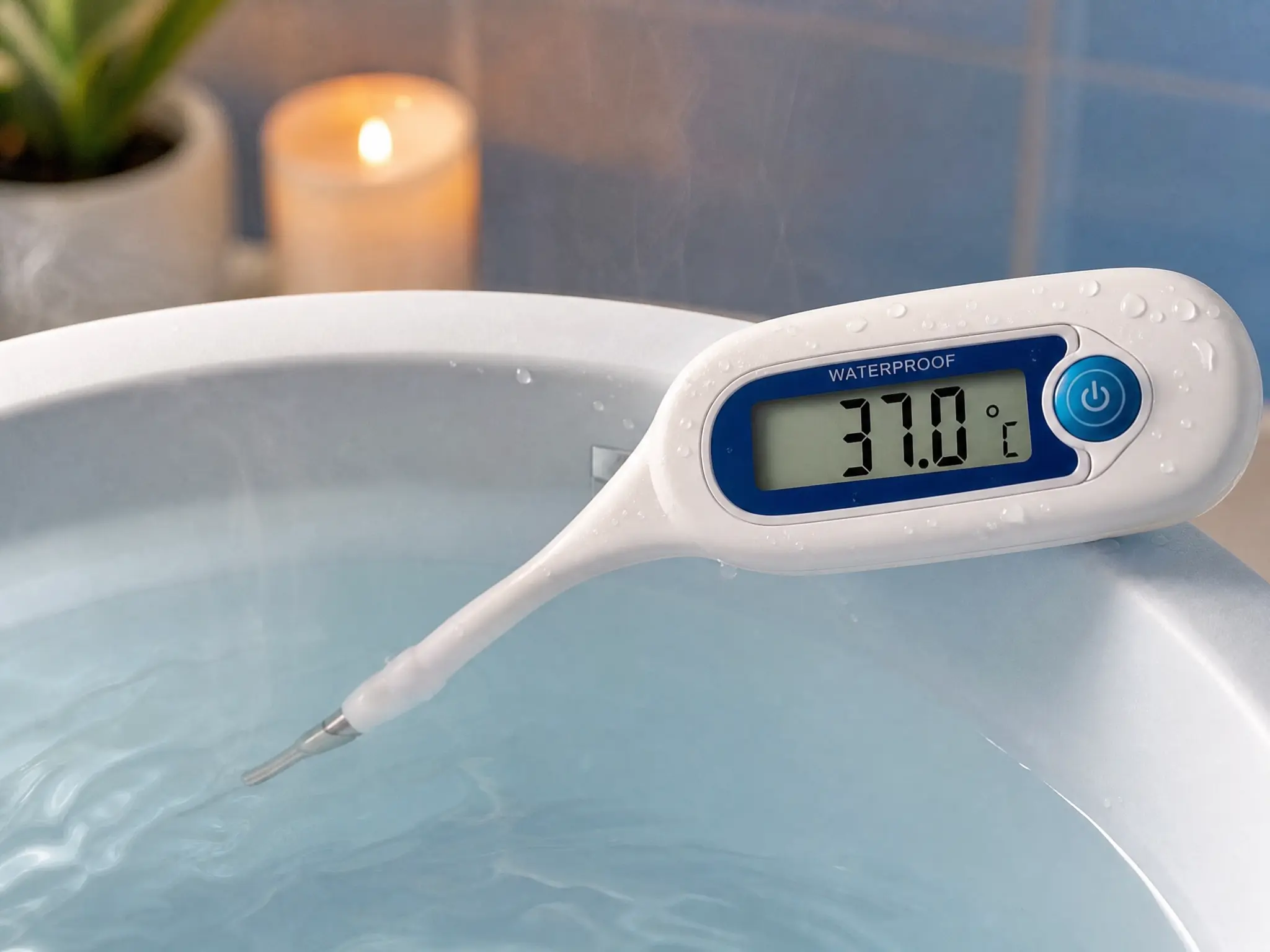
Yes, a warm-water bath is one of the gentlest ways to heat a love doll safely. Fill a container with water below 104°F (40°C), and never above 112°F (44°C). Submerge the removable parts for about 10 minutes — silicone parts may need 10 to 12 minutes to warm through.
Water is your friend because it gives the most even heat with no hot spots. Still, follow a few rules:
- Always use a thermometer — never trust your hand, and never use hot or boiling water.
- Dry the cavity thoroughly afterward with a drying rod or microfiber cloth. Trapped moisture causes mold and black spots.
- Warm removable inserts rather than the whole body whenever you can.
One important caveat: do not submerge dolls that contain electronics or built-in heaters. A full-body bath also adds a lot of water weight and creates a real slip-and-drop risk. The short answer is that warm water is ideal for removable parts, but risky for a full doll.
How do you warm a whole sex doll with an electric blanket or built-in heater?
To warm the whole body, wrap the doll in a doll-safe electric blanket on its lowest setting, or switch on its built-in heater. Keep the blanket no hotter than body temperature; typical devices span a range of about 20–50°C (68–122°F), so the lowest setting is the safe one. A built-in full-body heating system reaches its set temperature in about 20 to 30 minutes and can take up to about 2 hours to warm the whole body through.
Doll-specific heating blankets beat generic ones. They pack in more heating wires, a fleece lining, and an auto-off timer — features that matter because TPE and silicone conduct heat so poorly. A generic blanket often warms only a small patch, leaving the rest of your doll cold.
Using a built-in system is straightforward:
- Plug in the built-in heating cable.
- Set the temperature on the control panel to body temperature or lower.
- Unplug it as soon as the doll feels warm.
Never leave a blanket or heater running unattended. The Electrical Safety Foundation International notes that heating pads and electric blankets cause almost 500 fires each year, so treat these devices with respect. For a cheap pre-warming boost, tuck your doll under warm sheets with a thermos or hot-water bottle nearby. Once warm, silicone holds heat for hours, so you rarely need to reheat mid-session.
Which sex doll warming method is best? 3 methods compared
The best method depends entirely on your goal: speed, evenness, or whole-body warmth. There is no single winner, so match the method to your scenario. Here is how the three stack up.
| Method | Warm-up time | Safe temperature | Best for | Cost |
|---|---|---|---|---|
| USB heating rod | ~7–10 min | ~43°C (auto) | Fast, targeted pre-use cavity warmth | Low |
| Warm-water bath | ~10–12 min | Below 40°C | Even heat, no equipment | Free |
| Electric blanket / built-in heater | 20 min – 2 hr | Body temp / lowest setting | Whole-body warmth, cold climates | Medium–high |
Match the tool to the moment. Short on time? Grab the rod. No gear at hand? Use warm water on the removable parts. Cold bedroom and a long evening ahead? Start the blanket early.
The key takeaway is that combining methods gives the most realism: use a rod for the cavity and a blanket for the body. When two methods tie, let safety and auto-shutoff decide the winner.
What should you never do when warming a sex doll?
Never rush the job with high, direct, or electrical heat — that is how dolls get ruined and people get hurt. Keep this list close.
| Never do this | Why it is dangerous |
|---|---|
| Microwave the doll or its parts | Invisible, uneven hot spots cause bursting, fumes, and burns. |
| Use boiling or hot water above 44°C | Melts and deforms TPE permanently. |
| Use a hair dryer or direct heat (radiator, space heater) | Localized high heat damages TPE; hair dryers add electrocution risk. |
| Leave any heater, blanket, or inserted rod unattended | Fire, overheating, and material damage. |
The microwave is the single worst choice. The USDA’s Food Safety and Inspection Service warns that microwave energy heats unevenly and leaves hidden “cold spots,” while superheated water can erupt without warning. For your doll, that means burns for you and melted material inside the skin.
The hair-dryer warning is worth taking seriously. Hand-held hair dryers are a well-documented electrocution hazard around water. CPSC figures cited in its 2011 rulemaking record 110 hair-dryer immersion electrocutions between 1980 and 1986 — an annual average of about 15.7 deaths per year before immersion protection became standard (a 1990 CPSC release estimated about 17 per year, roughly 10 of them children under 10). The fix has been mandatory since January 1, 1991, when the UL 859 standard began requiring “full immersion protection when in either the ‘on’ or ‘off’ position.” Non-compliant dryers still slip through: in 2025 the CPSC announced “Empower Brands Recalls Remington Hair Dryers Due to Risk of Serious Injury or Death from Electrocution and Shock Hazards,” for models lacking that immersion-protection device. Combine that shock risk with localized heat that scorches TPE, and the message is clear: keep hair dryers far away from your doll.
To put it simply, gentle, temperature-controlled heat is the only safe path. Everything on this list trades a few saved minutes for permanent damage or injury.
Frequently Asked Questions
A USB heating rod warms a cavity in about 7 to 10 minutes. A built-in full-body heater reaches its set temperature in about 20 to 30 minutes, but warming the entire body through can take up to about 2 hours. Plan ahead in cold weather.
Target about 37°C (98.6°F), and keep heat below 40°C (104°F) as your working limit. Treat 44°C (112°F) as the ceiling, because damage risk rises sharply above 48°C (120°F). When in doubt, cooler is always safer.
No — never microwave a doll or its parts. Microwaves create uneven hot spots that cause bursting, fumes, and burns, and they can melt the material from the inside out. Use warm water or a temperature-controlled heating rod instead.
Only if it is an auto-shutoff rod with a temperature sensor. Even then, keep it in for about 10 minutes and never more than 15 minutes. Never leave any rod running unattended.
No — a hair dryer is a bad idea. Its localized high heat damages TPE, and hand-held dryers carry a real electrocution risk near water. Stick to gentle, temperature-controlled methods like a warm bath or a USB rod.
Warming your sex doll safely comes down to patience, a thermometer, and the right tool for the moment — a rod for the cavity, a bath for removable parts, or a blanket for the whole body. Keep the numbers conservative, never rush with direct heat, and your doll will feel lifelike for years. When you are ready to upgrade your routine, shop SweetieDoll’s temperature-controlled heating accessories and keep every session warm, realistic, and worry-free.
References
- TPE material properties and heat limits: Engineering reference on thermoplastic elastomer types, safety, and usable temperature range, supporting TPE’s poor heat conductivity and low melting threshold. Xometry — 7 Types of Thermoplastic Elastomers (TPEs)
- Normal human body temperature (~37°C target): Stanford Medicine coverage of the September 2023 JAMA Internal Medicine study finding average adult body temperature is about 97.9°F. Stanford Medicine — Normal body temperature is personal
- Scald-burn temperature thresholds (safe-temperature ceiling): U.S. CPSC guidance showing 120°F water can cause third-degree burns in five minutes, and 150°F water in two seconds. U.S. Consumer Product Safety Commission — Avoiding Tap Water Scalds (Publication 5098)
- Hair-dryer electrocution risk and 2025 recall: Official CPSC recall confirming immersion-protection requirements and the electrocution hazard of non-compliant dryers. U.S. CPSC — Empower Brands Recalls Remington Hair Dryers (2025)
- Microwave uneven heating hazard: USDA food-safety guidance explaining microwave hot spots and superheating risks, supporting the no-microwave rule. USDA Food Safety and Inspection Service — Cooking with Microwave Ovens